

Disclosure
Jade Peak writes about places, experiences, and the people behind them, so hotels, operators, and companies come up often. We have no financial relationship with any entity named in this article. If that ever changes, we'll say so plainly, right here at the top.
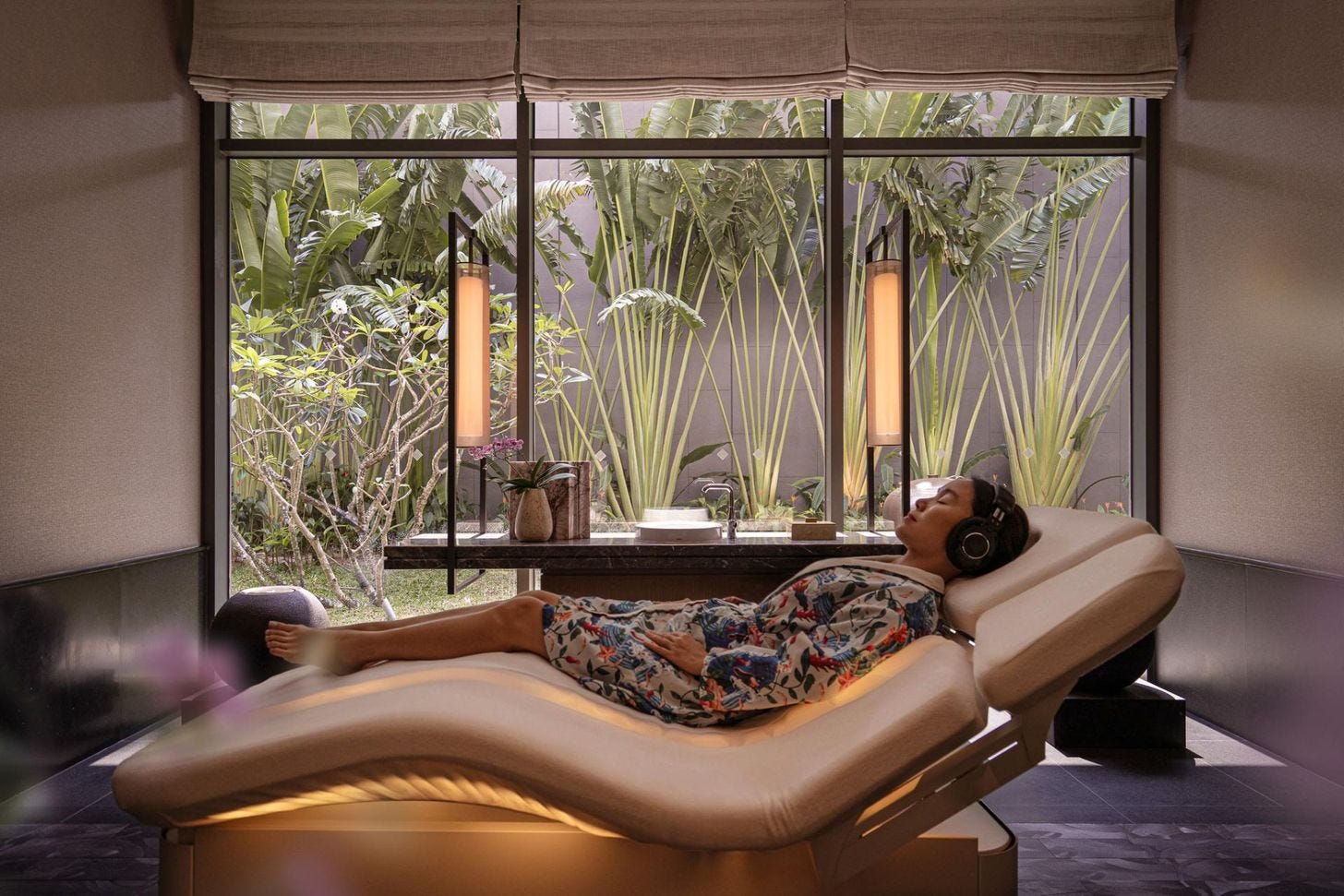
Lie down on a vibroacoustic bed and you feel the sound before you hear it. A low tone, usually around 40 hertz, runs up through the surface into your back and ribs. It sits at the bottom of human hearing, low enough that your body reads it as vibration more than music. That physical low frequency is the point, and it's what separates the therapy from a calm playlist.
A Norwegian idea from around 1980
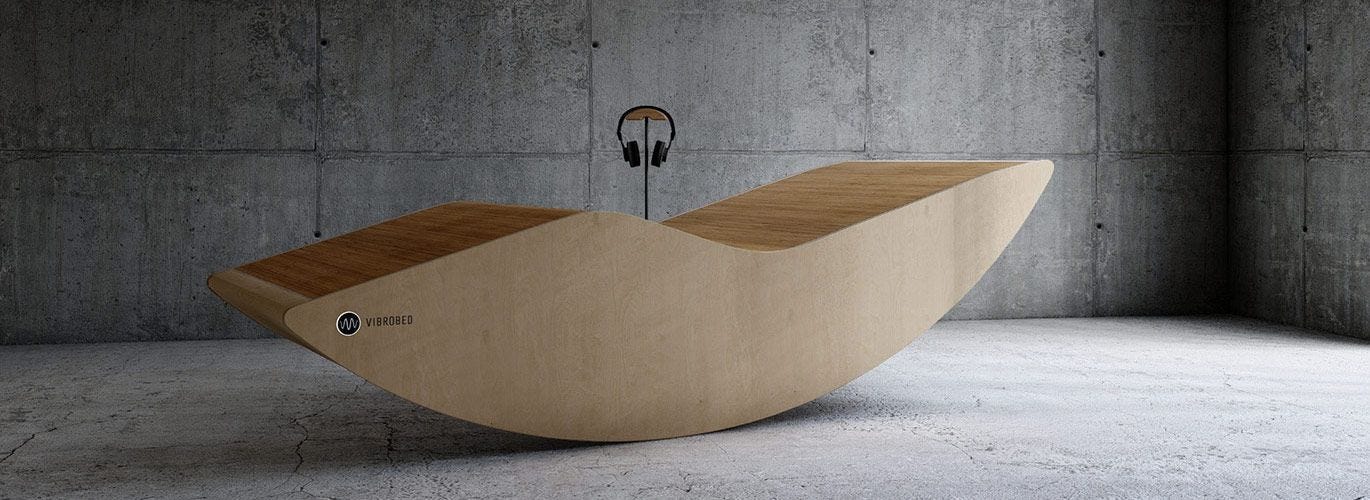
The idea traces to Olav Skille, a Norwegian educator who around 1980 laid people with tense muscles on surfaces loaded with low-frequency sound and watched their symptoms ease. Across a 30-to-120 Hz band he kept landing on 40 Hz for the deepest whole-body release. Modern beds, mats and loungers all refine that: transducers turn a low tone into vibration you take in through the body, usually with music on top.
Why the vibration calms you down
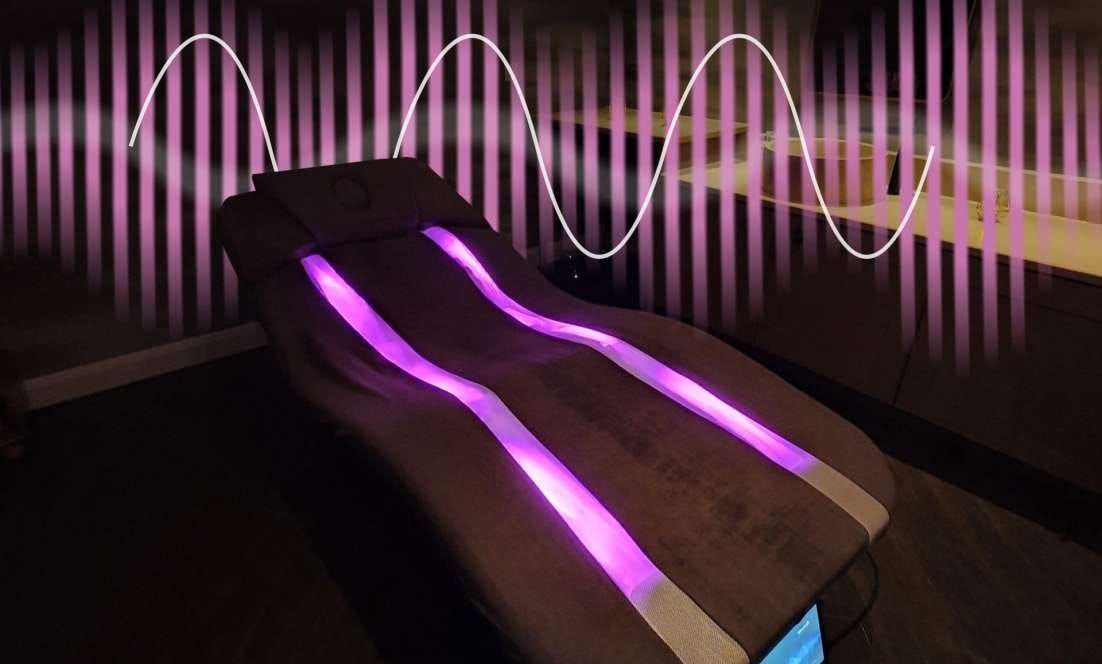
Why it calms you isn't mystical. The vibration stimulates mechanoreceptors in skin and deep tissue, and that steady signal tips the nervous system toward its parasympathetic, rest-and-repair side. Sessions that track heart rate variability see the balance shift, with drops in stress and muscle tension. A 2022 randomized trial at Palacký University recorded that shift in stressed students. Part of the effect likely runs through the vagus nerve and the old gate-control mechanism, where strong touch crowds out pain signals.
What the research supports, and what it doesn't
The evidence is real but small: pilot studies and modest trials, steadiest for stress, sleep and pain. A 2020 fMRI study found that people with insomnia slept longer after sessions. A review of around twenty pain studies reported less pain and more relaxation, fibromyalgia included. At Wilfrid Laurier University, 40 Hz sessions improved motor function in Parkinson's patients. Promising is the honest word. Anyone selling it as a cure is telling you more than the evidence can.
Why we program it after a cold plunge
At Jade Peak the whole premise is recovery after effort, so this is the use that interests us most. A hot-cold cycle, sauna into cold plunge, spikes your system on purpose. Afterwards you want the opposite signal, and calming the nervous system is the one thing vibroacoustic sound most reliably does. Contrast to raise the tide, vibration to let it settle. No trial has tested that exact pairing, so we treat it as informed sequencing, not proven protocol.
From resort spas to a mat on your floor
You'll meet it two ways. Spas are building it in: the Opal group runs beds under massages, and Spa Vision sells zero-gravity loungers to hotels. At home, Woojer makes a compact six-transducer mat, inHarmony sells folding sound-bed mats, Biomat pairs it with amethyst heat, and Sound Oasis sells the VTS-2000 plus 40 Hz tracks that replicate the ones used in the studies.
What holds up, and what's marketing
What holds up is the nervous-system effect. What doesn't is the disease and "cellular healing" language some brands reach for. This is an evidence-backed way into a parasympathetic state, sold in a market that keeps draping that modest, real benefit in claims it can't carry. Knowing the difference is the whole game.
What to look for before you try one
Look for real low-frequency vibration near 40 Hz through transducers, not speakers, ten to twenty minutes, with music you like over the top. One caution: because it shifts cardiovascular and nervous-system activity, anyone pregnant, with a pacemaker, or with a heart condition should ask a doctor first.
Originally published at jadepeak.com.
