

Disclosure
Jade Peak writes about places, experiences, and the people behind them, so hotels, operators, and companies come up often. We have no financial relationship with any entity named in this article. If that ever changes, we'll say so plainly, right here at the top.
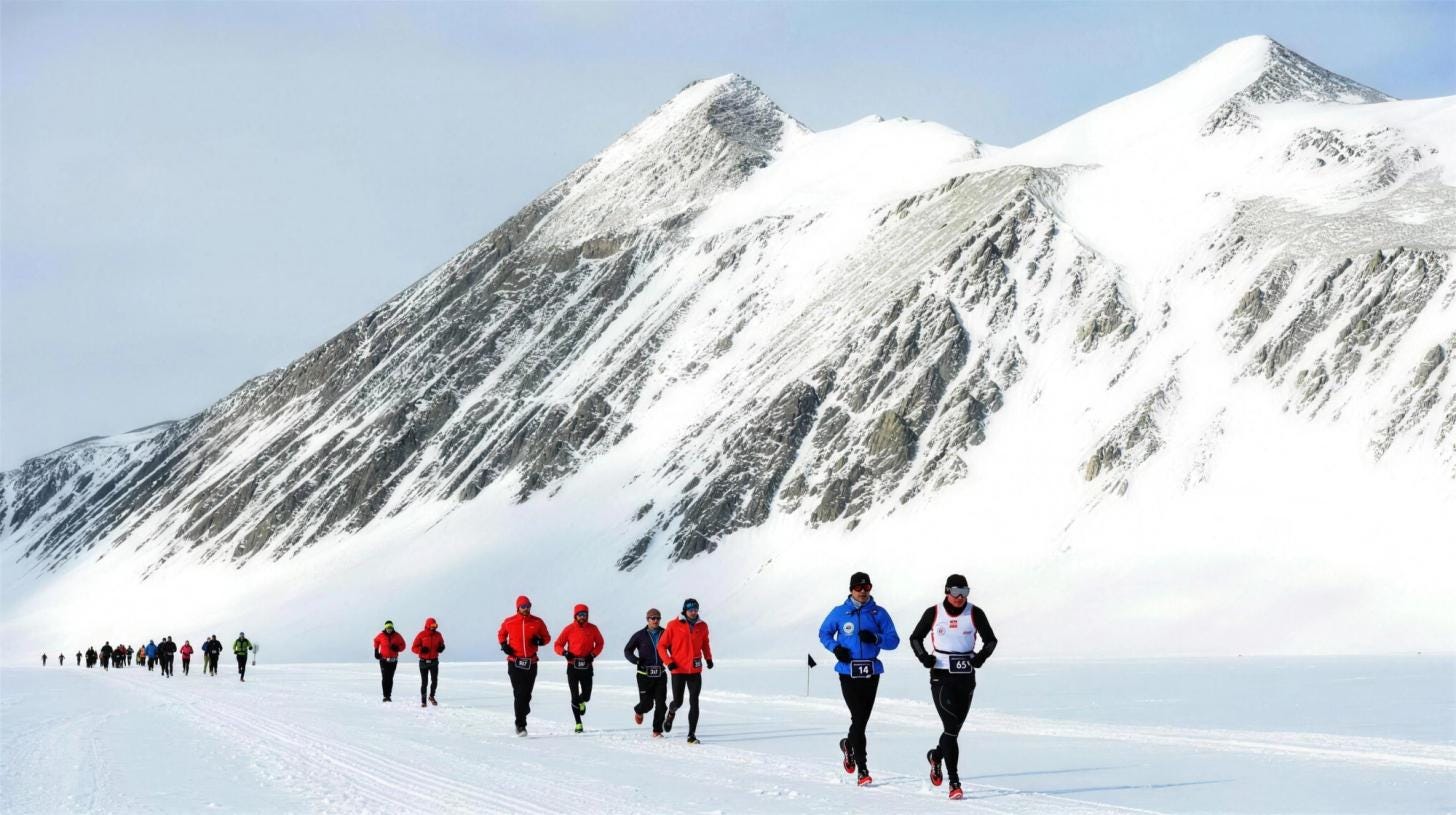
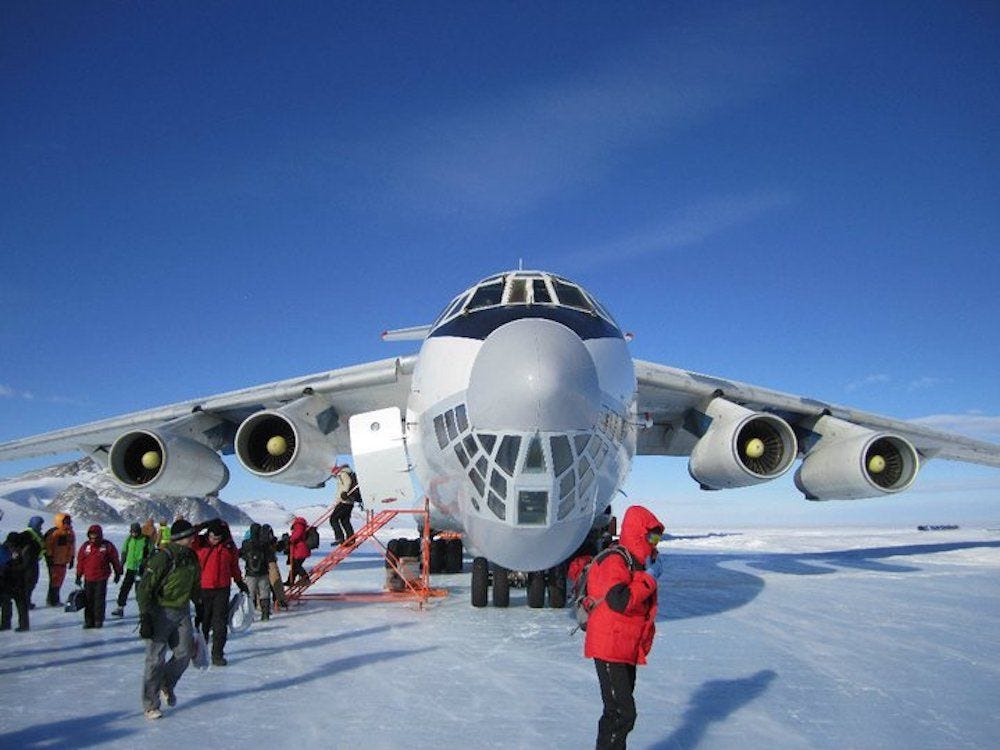
The world's southernmost race takes place at Union Glacier, about 80° south and roughly 800 km from the South Pole. The journey itself is already an adventure. You fly from Punta Arenas, Chile, into the Antarctic interior before running loops on hard-packed snow under 24 hours of daylight, with no night, no crowds, and no wildlife this far into the continent. The air sits around −20°C, and the wind can make it feel closer to −40°C.
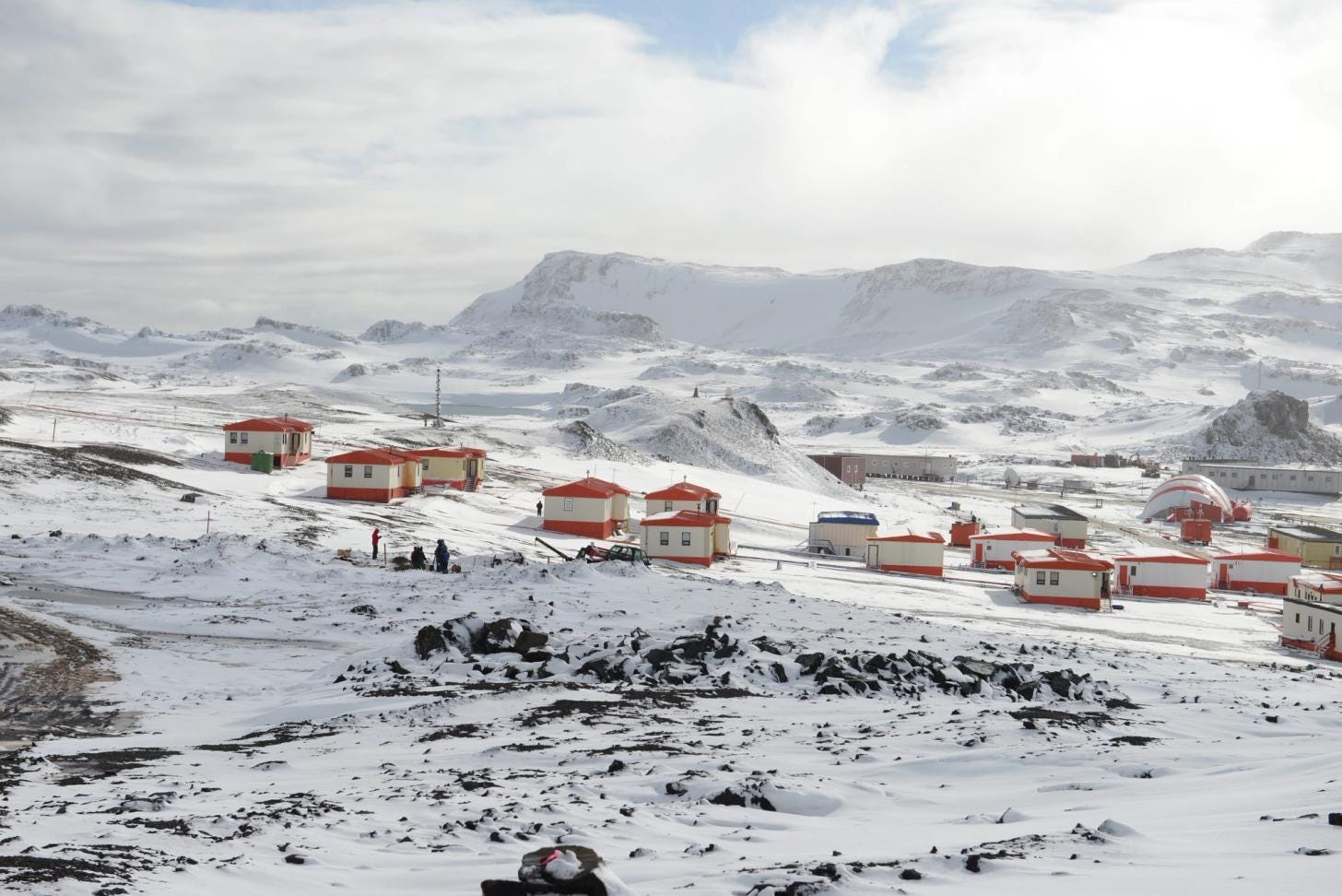
At Jade Peak, we're always interested in experiences where the journey is just as extraordinary as the destination. The event offers two main races: the marathon and the 100K ultramarathon. Here's what each one involves and what to think about before signing up.
The Marathon
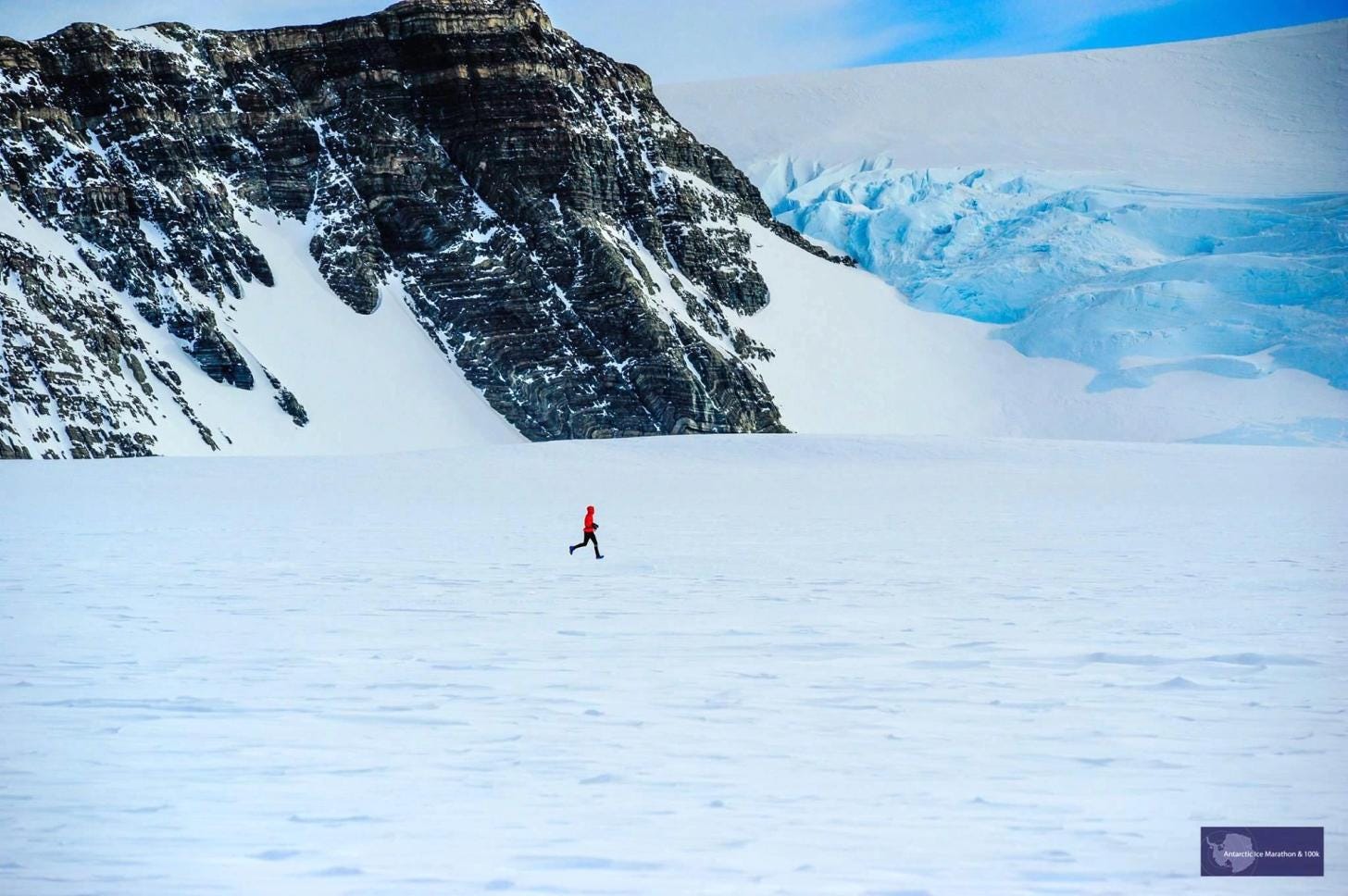
The marathon covers the traditional 42.195 km, run over loops on snow and ice. It first took place in 2006 and remains the southernmost marathon in the world. Only around 50 people run it each year. That might sound like a tiny number, but when you consider the cost and the effort it takes just to reach the start line, it's actually remarkable.
A place costs around €15,000 (about US$17,000), covering the flights from Chile, the camp, and all the logistics required to stage the event. It was founded by Richard Donovan, the same man behind the North Pole Marathon and the World Marathon Challenge—seven marathons on seven continents in seven days.
The race also produces remarkable stories. In 2025, Catherine Drysdale won the event outright, finishing ahead of every male competitor. The oldest finishers on record are an 84-year-old man (2019) and a 70-year-old woman, who completed the race in 7 hours and 43 minutes (2025).
If you're already preparing for this challenge, we'd love to follow your journey.
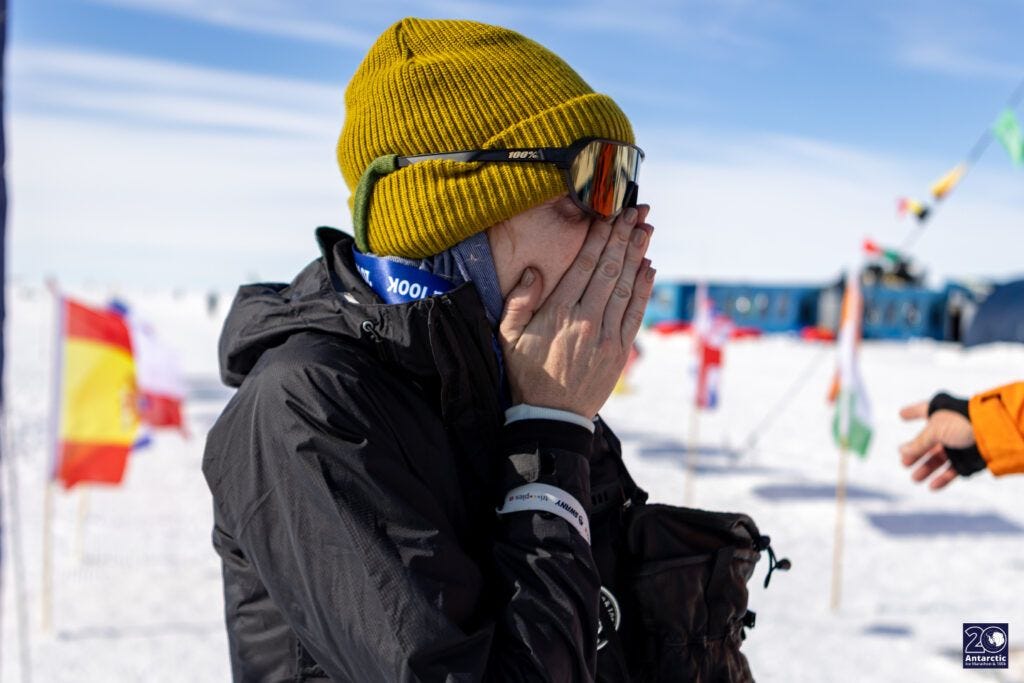
The 100K Ultra
The ultra covers 100 km (62 miles) it is more than two marathons back-to-back on a flat course made up of multiple small loops with only around 200 metres of elevation gain. It is the southernmost ultramarathon in the world, run on the same ice as the marathon.
Runners have 24 hours to finish, although most complete it in around 10 hours. The men's record belongs to Yusheng Ni (9 hours 20 minutes, 2024) and the women's to Julianne Young (15 hours 31 minutes, 2012).
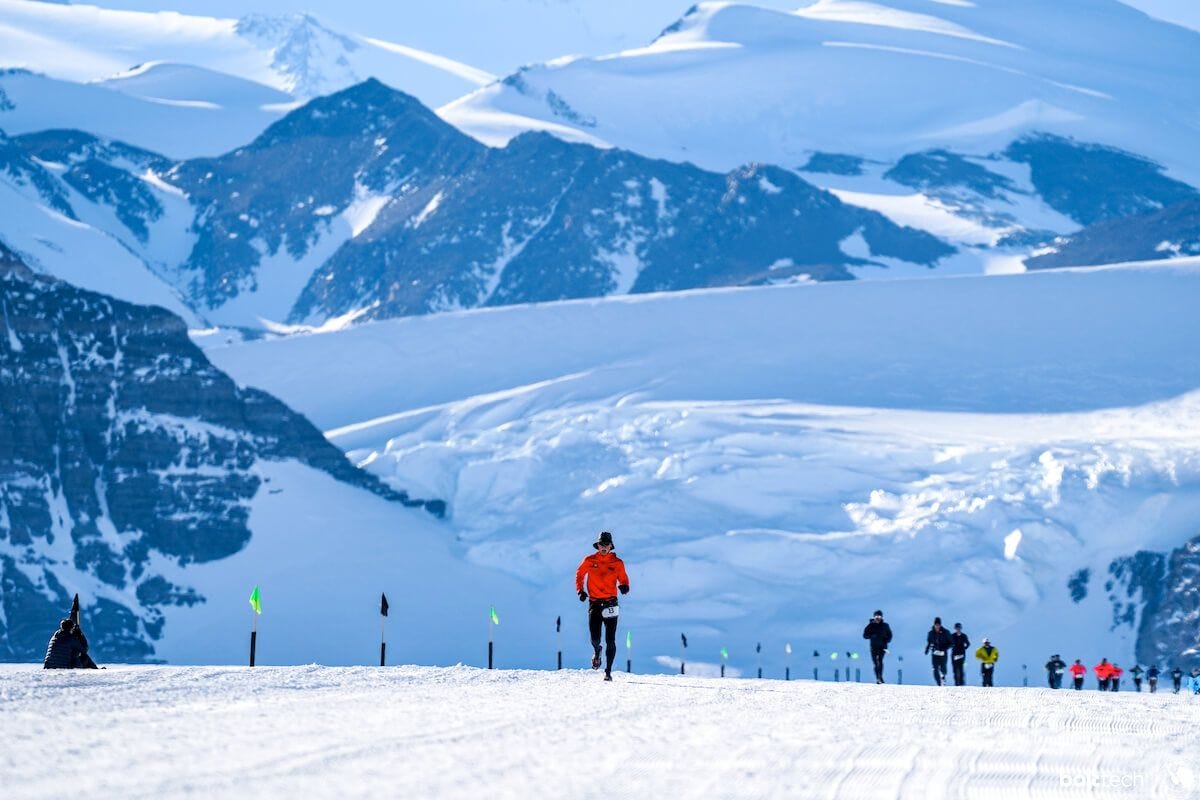
It shares everything with the marathon: the same small field of around 50 runners, the same flights, the same extreme cold, and the same endless daylight. The event also includes several shorter distances, allowing runners to choose between a 10K, a half marathon, the marathon, the 100K ultra, and even a fun backwards mile.
About one in ten starters doesn't finish. That statistic alone tells you everything about what Antarctica can do over that distance.
What to Think About Before You Enter
Cost and logistics come first. Entry alone runs into five figures, securing you a place on a highly complex flight operation where the weather ultimately decides the schedule. You'll need flexibility, time, and a realistic budget.
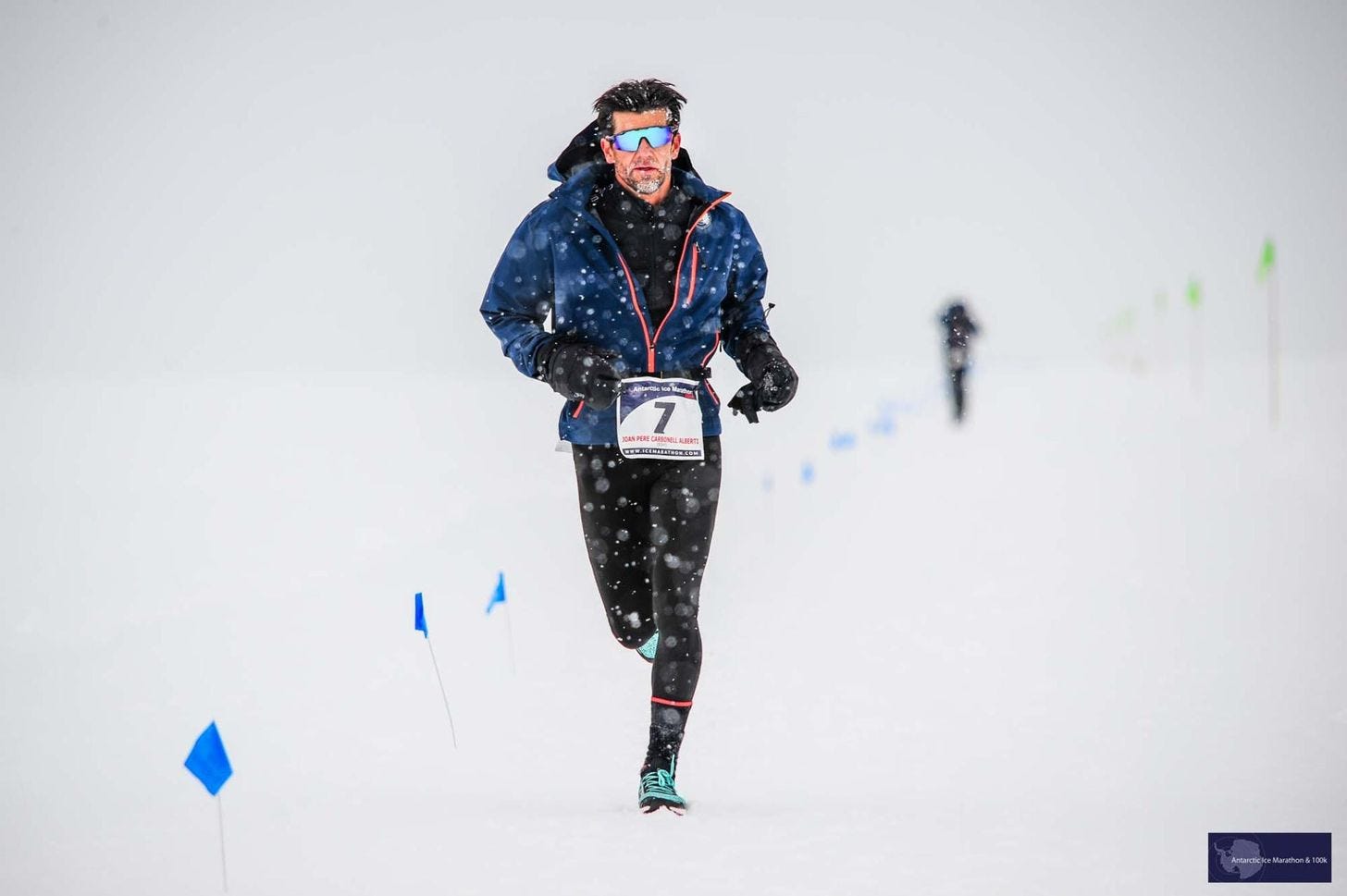
After that, the conditions become everything. Dress for an entire day's temperature range: start with a moisture-wicking base layer, either merino wool or a technical synthetic, followed by an insulating mid-layer and a windproof outer shell. Carry spare layers that you can add or remove while moving. Glacier sunglasses with polarized, anti-fog lenses are essential, as is a breathable balaclava to protect your face. Petroleum jelly on exposed skin and anywhere clothing rubs can also make a huge difference.
Finally, train in conditions that resemble Antarctica as closely as possible, and ask the organisers directly for advice. No online guide knows the ice better than the people who run the race.
Originally published at jadepeak.com.
