

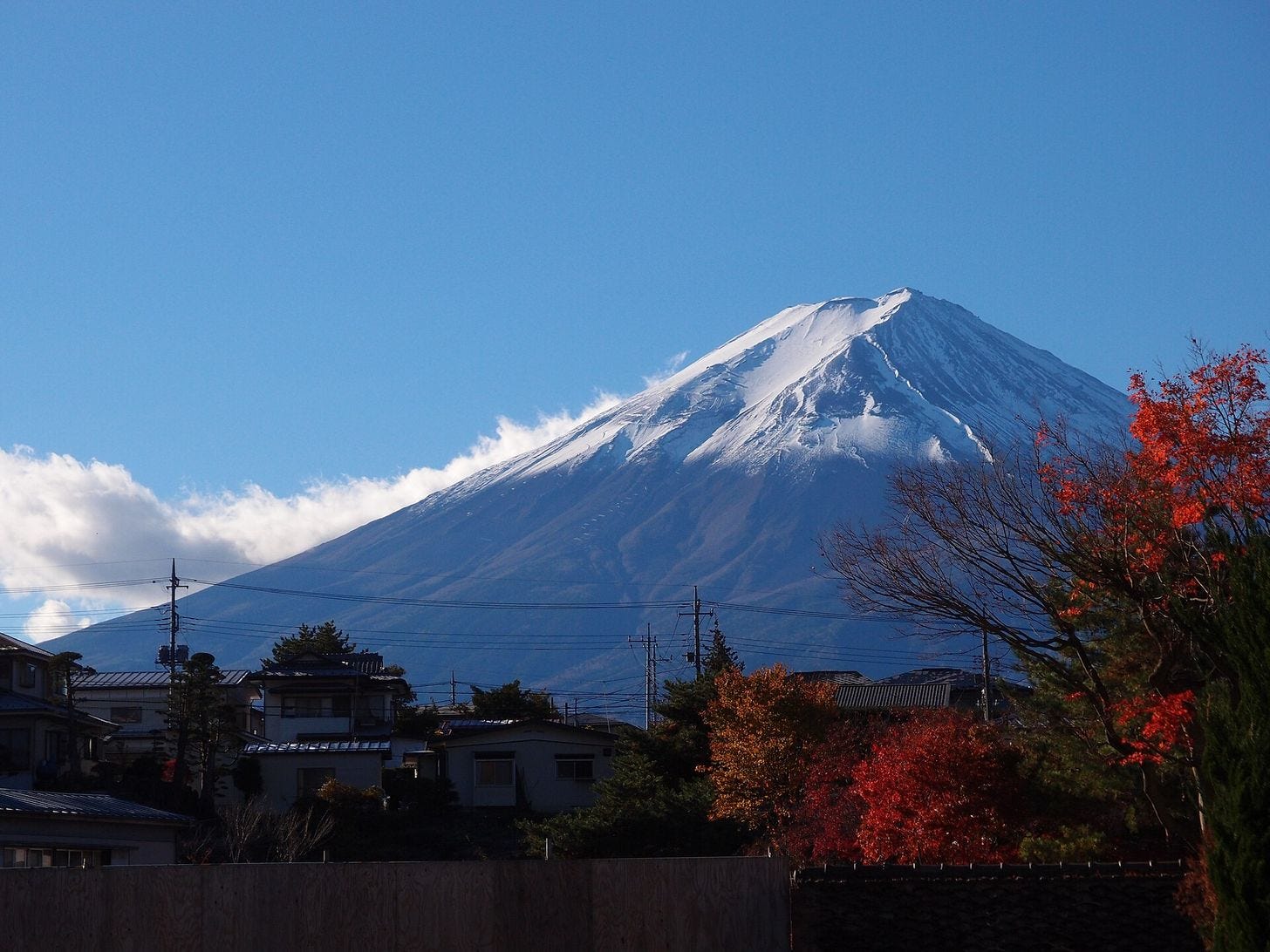
For just a few months each year, Japan opens the trails to Mt. Fuji, also known as that perfect 3,776 meter cone volcano with cherry blossoms framing the peak you see making the rounds on Instagram every 2 weeks. Now if you search Mt. Fuji itineraries you’ll mostly see recommendations for AirBnBs and viewing points and some articles for hiking it over a few days.
The problem is if it’s your first time in Japan, you probably don’t have that much room in your itinerary to sacrifice between Tokyo, Osaka, Kyoto, and wherever else you’re headed. So, if you’re looking to speed run Fuji on your way from Tokyo to wherever else is on your itinerary, this recc is for you.
An obligatory disclaimer: if you make a 12 hour attempt on Mt. Fuji, you’ll need to be in extraordinarily good hiking shape and well accustomed to altitude. For context, Marina and I summited successfully after coming down from Mont Blanc just a few months earlier so our bodies were well acclimatized from the 4,000m+ experience.
Getting There
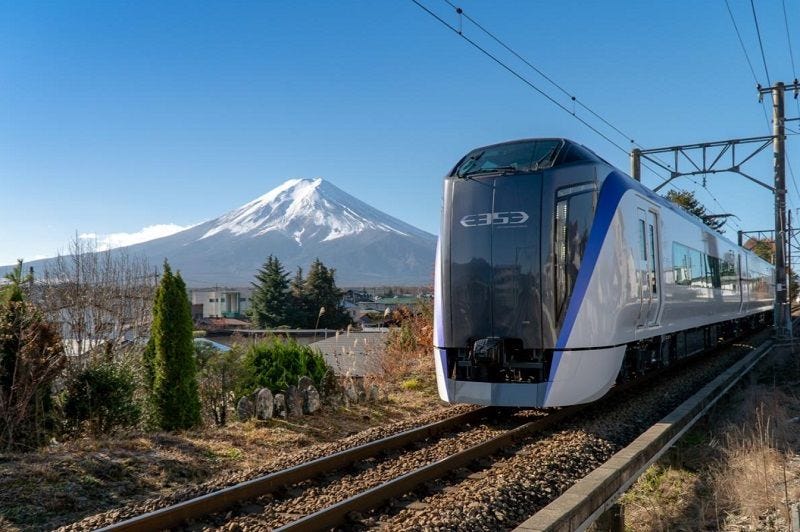
From Tokyo, you can either bus directly or take a train and a shuttle. Either way you’ll start from Shinjuku station. The bus ride is slightly quicker, at around 2.5 hours, but we personally don’t like long bus rides so we opted for the train. Buy tickets for the Fuji Excursion from Shinjuku Station, which will drop you at Kawaguchiko Station. The earliest train leaves from Tokyo at 7:30 am, but I recommend getting to Shinjuku at least 30 minutes early to navigate that absolute hell-spawn of a maze to get to the right train platform.
Once you get off the train in Kawaguchiko follow the crowd outside and look for the Subaru Line / Fuji 5th Station shuttle. The boarding zone parking lot is extremely chaotic with multiple buses and long queues criss-crossing, so remember to lock in even though you’re probably sleepy at this point and hop on the right one.
The shuttle takes about an hour to get to the trailhead - try and grab a quick nap while you can. There’s a huge convenience store right across from the drop off point to stock up on water, snacks, and grab the legendary walking poles to get stamps if that’s your thing. We ended up starting our hike around 11 am after a 5:30 am wake up time in Tokyo just for reference.
Getting Up
The official climbing season runs from early July to September, and there are an increasing number of rules to follow due to over tourism. The year we went, they added an entrance fee (it’s now up to 4,000 yen / person, or about 25$ USD / person at time of writing), advance registration, and a daily cap on the most popular trail. Once the number is exceeded, they shut the gates for the day! However, if you’re on the 1st train/bus there, you don’t need to worry about this at all.
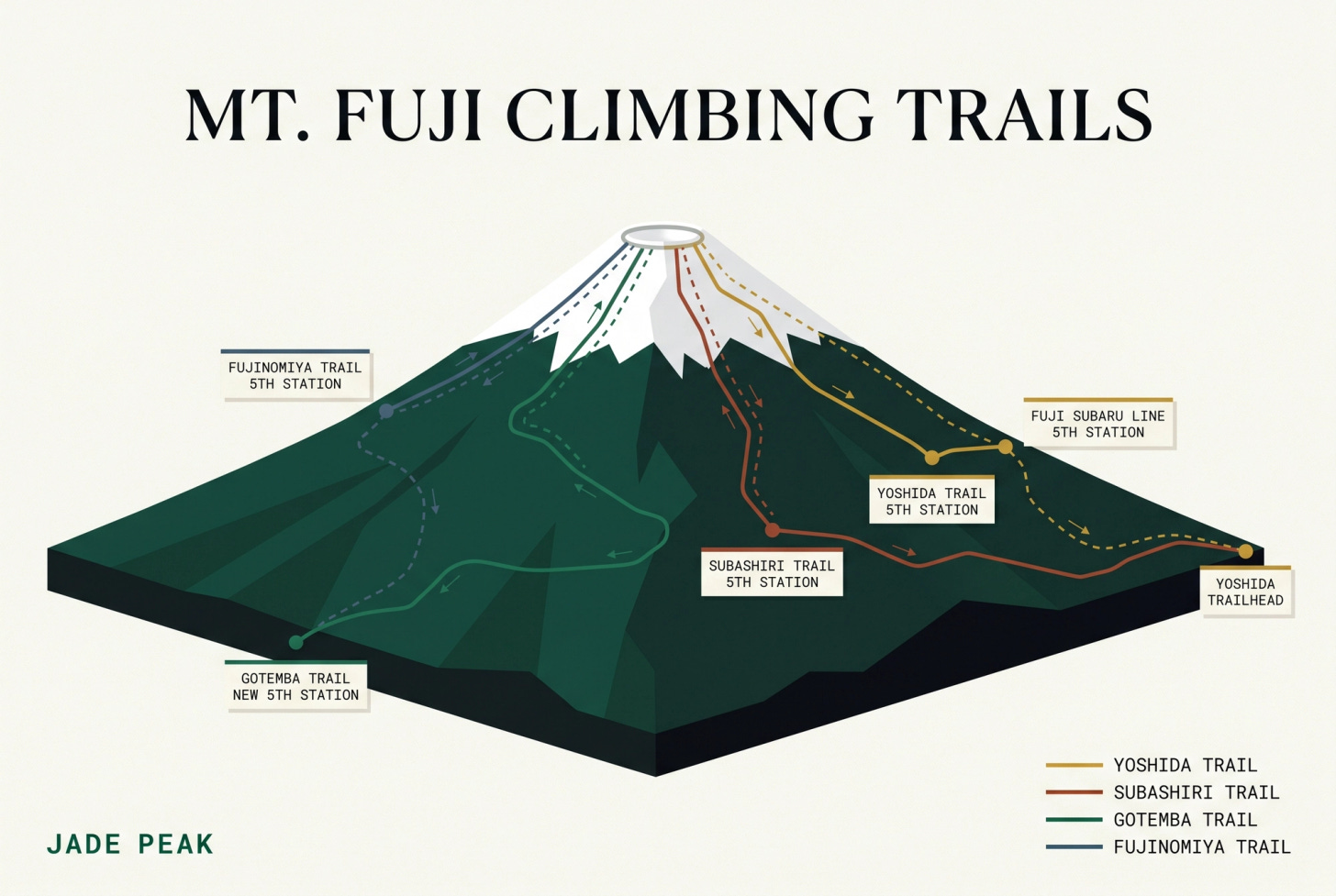
There’s a few ways to get up the mountain, but the Yoshida Trail is the most popular route for a reason. It’s the closest and highest starting point when coming from Tokyo, and there’s very good climbing infrastructure on this route. There are 10 stations — bit confusing when you start talking about bus and train stations — but this is the local terminology so we’re going with it. Station 1 is at the base of each trailhead, and station 10 is the summit. You start at station 5 on the Yoshida Trail if you follow the getting there instructions above.
Each station on the mountain is a pit stop with seated areas, food, drink, and our absolute favorite: steaming hot, watery, salty ramen. The quality is more cup-a-noodle than michelin star, but when your body is cold and tired and wet it’s an absolute dream.
Starting from the 5th station on the Yoshida Trail, you have 1,470 meters (~8,000 feet) of elevation gain ahead of you spread over just under 7 kilometers. Piece of cake for most of our readers, but the starting elevation is 2,000 meters, so we do recommend starting slow.
You’ll get passed by a couple of grandmas in light gear, just part of the experience. Once you see this beautiful torii, you’ve made it!
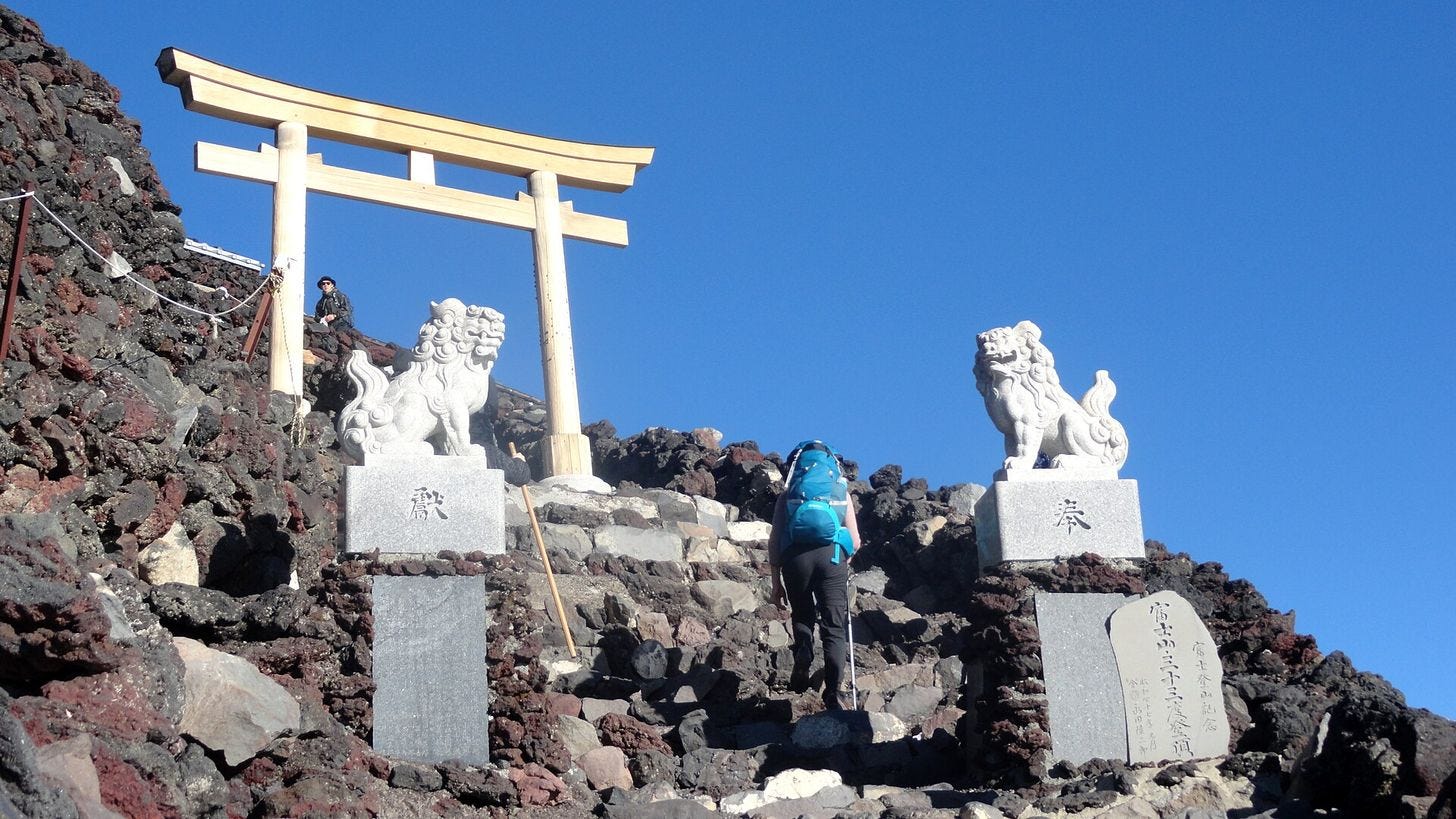
If the altitude isn’t hitting super hard, take the time to enjoy the summit. The views are breathtaking, everyone working up there is really friendly, and there’s a little shrine where you can make a prayer to the mountain spirits if that’s your thing. You can walk around the caldera once you’re up there, but to be honest the views aren’t that much better than from on the ridge, and you’ve got a long way down yet :)
Coming Down
There’s a separate down and out route that branches off from the yoshida trail and then meets back up with it a little lower down. It’s got a mix of switchback and scree fields that eventually spit you back out at the 5th station where you started your journey. We ended up back at the parking lot around 6 pm. All total ~ a 13 hr day!
The same shuttle you took up takes you back into town, and the last one leaves at a quarter to 7, but no shame if you decide to hire one of the waiting cabbies for ~$50 USD to drive you directly to your hotel. We stayed in a beautiful container AirBnB with a view of Fuji and walked to a nearby korean bbq restaurant to carb load after a pretty long day.
Here are some of the most common questions we’ve gotten about this experience over the years, let us know if you have anything else we should add to this!
Frequently asked
When can you climb Mt. Fuji?
The official season runs from early July to 10 September: the Yoshida Trail opens 1 July, the Shizuoka trails on 10 July, and that's when trails and mountain huts are open and staffed. Outside that window the route is officially closed, the huts shut, and the climb turns genuinely dangerous: bad weather, no rescue cover, no shelter.
Do you need a reservation or permit to climb Mt. Fuji?
Yes. Every trail now charges a 4,000-yen climbing fee with advance online registration, and the Yoshida Trail caps numbers at 4,000 climbers a day. Reserve and pay online ahead; same-day spots exist at the trailhead but sell out. Climbers with a mountain-hut reservation are exempt from the cap and the gate hours, but everyone pays the fee.
Can you climb Mt. Fuji in one day, or do you need to stay in a hut?
Physically yes, and the rules now shape how: without a hut reservation you can't pass the 5th Station gate between 2 p.m. and 3 a.m., a rule built to stop overnight "bullet climbing". A one-day push means an early-morning start and a same-day descent, and it only makes sense if you're fit and acclimatized. Most guides still recommend a night at a 7th- or 8th-station hut to break up the altitude and catch the summit sunrise.
How hard is climbing Mt. Fuji, and is it good for beginners?
It's non-technical, with no ropes or scrambling, but it's a long, steep slog at altitude. From the Subaru Line 5th Station (about 2,300 m) you climb roughly 1,470 m to the 3,776 m summit. A reasonably fit hiker can do it; the real challenges are the thin air and the duration, not the terrain.
How do you avoid altitude sickness on Mt. Fuji?
Go slow, hydrate, and rest often: most people who struggle simply climbed too fast. Spend an hour or two at the 5th Station adjusting before you start, consider an overnight hut, and turn around if a headache becomes nausea or dizziness. The summit isn't worth pushing through real symptoms.
How do you get to Mt. Fuji from Tokyo?
From Shinjuku, take the Fuji Excursion train to Kawaguchiko (about 2 hours), then the Subaru Line shuttle (about 50 minutes) up to the Yoshida Trail's 5th Station. A direct highway bus from Shinjuku is slightly faster (about 2.5 hours). Aim for the earliest departure: the daily cap fills, and the 2 p.m. gate rule rewards a morning start.
Originally published at jadepeak.com.