

Disclosure
Jade Peak writes about places, experiences, and the people behind them, so hotels, operators, and companies come up often. We have no financial relationship with any entity named in this article. If that ever changes, we'll say so plainly, right here at the top.
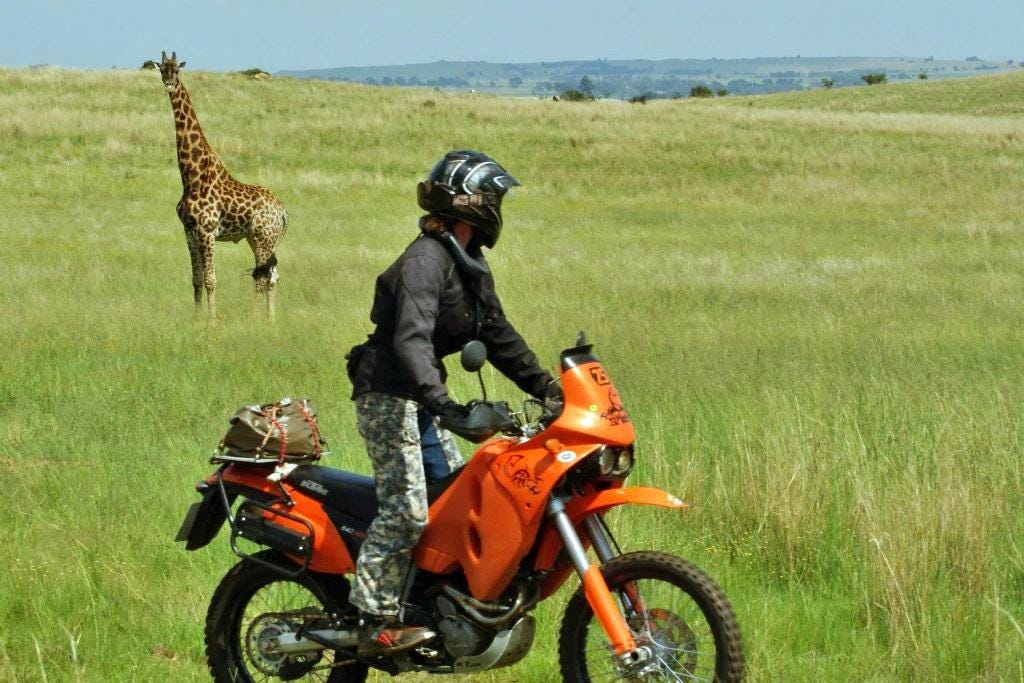
What to Pack, Expect, and Watch For on an East African Motorbike Safari
A guided ride across East Africa means dirt roads, long days in the saddle, cold highland mornings, hot afternoons, and nights that alternate between camping and simple lodges. Here’s what Jade Peak thinks you should know before setting off.
What to Wear
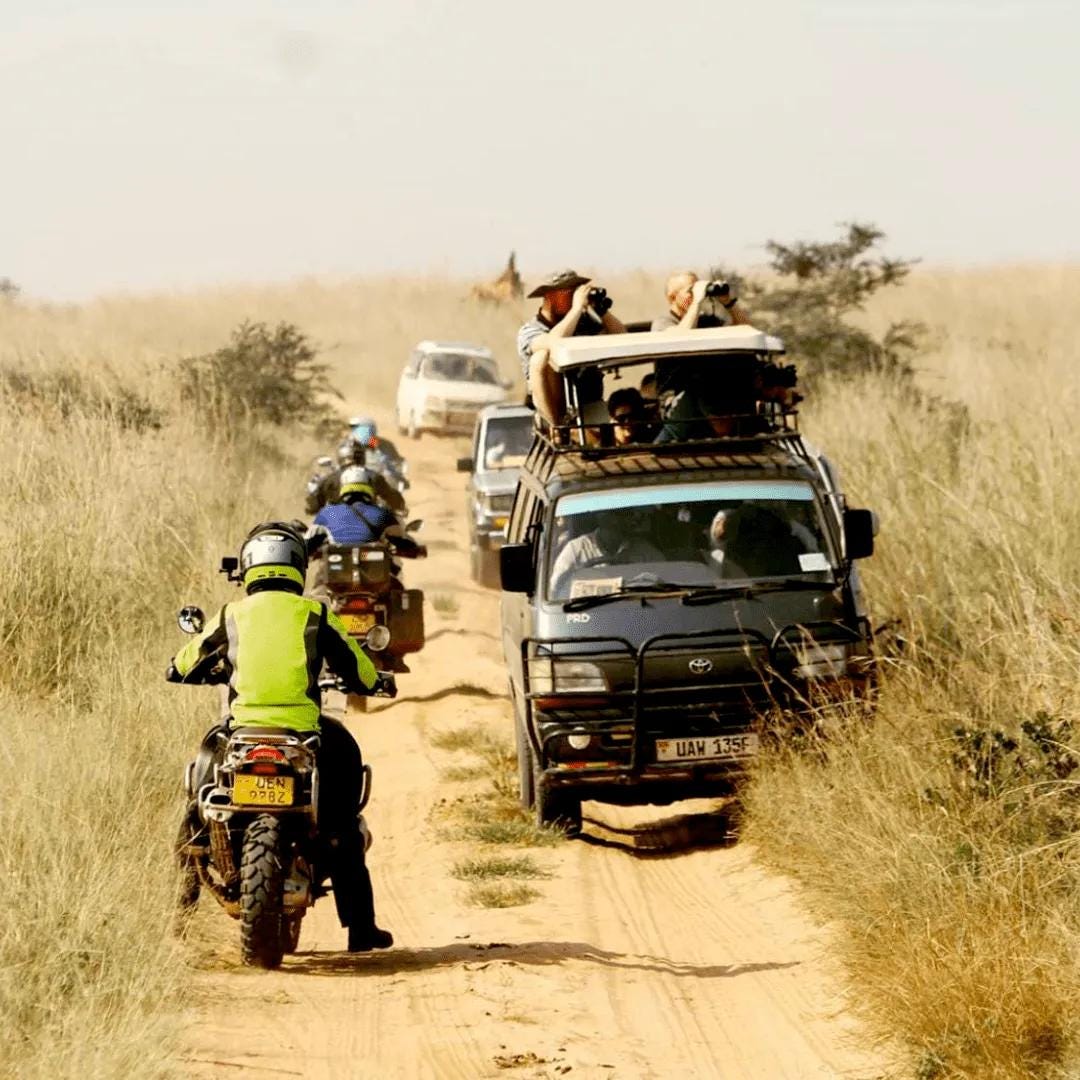
Ventilated, armored gear will always beat anything chosen for looks. Bring a dust-resistant off-road jacket and trousers with back, shoulder, elbow, and knee protection, sturdy over-the-ankle boots, full gloves, and a proper helmet ideally an adventure-style helmet with a peak and goggles for dusty sections.
Pack layers. Mornings at higher elevations can be surprisingly cold, while afternoons on the plains can be extremely hot, so you will want clothing that is easy to add or remove throughout the day.
Round it out with a buff to keep dust out, a good pair of sunglasses, high-SPF sunscreen, and a lightweight waterproof jacket. Most importantly, break your boots in before the trip begins.
What to Expect
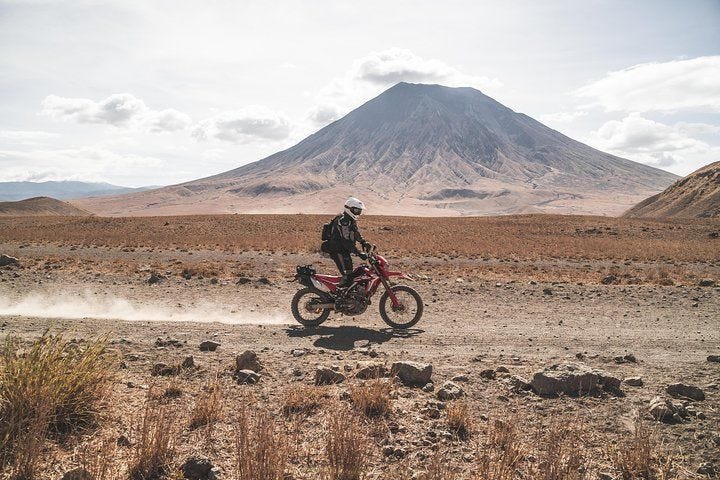
Expect long riding days, mostly off tarmac. You will spend most of your time on gravel roads, sand, rocky tracks, dry riverbeds, and the occasional water crossing.
You will eat dust, feel the heat, and finish each day tired. Distances may look short on a map, but road conditions, wildlife, and regular stops make every day longer than you might expect.
Accommodation usually alternates between camping in the wilderness and simple lodges or tented camps, so pack a headlamp and a pair of earplugs.
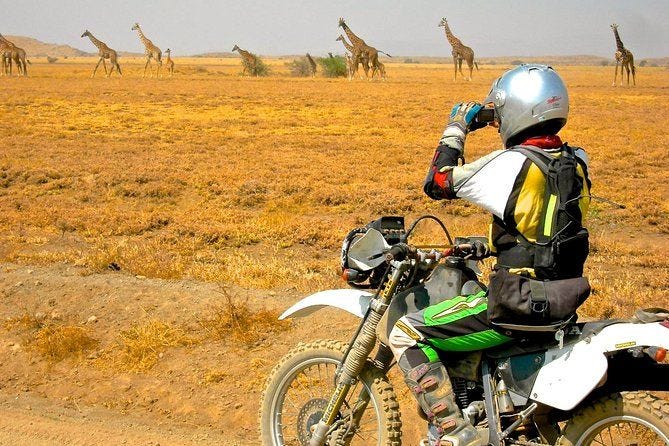
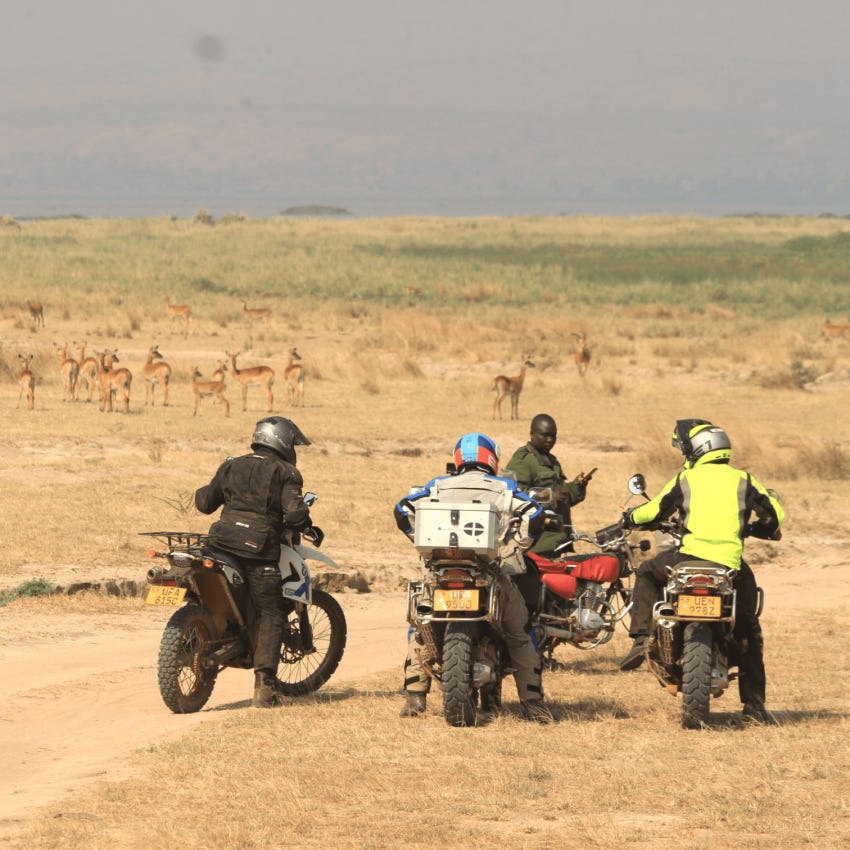
Between the riding, you will get remarkably close to wildlife and visit communities that many traditional safari itineraries never reach.
This is a physically demanding journey, so treat it like one. That is exactly why, at Jade Peak, we place it in the Adventure category of our editorial guides.
Staying Safe
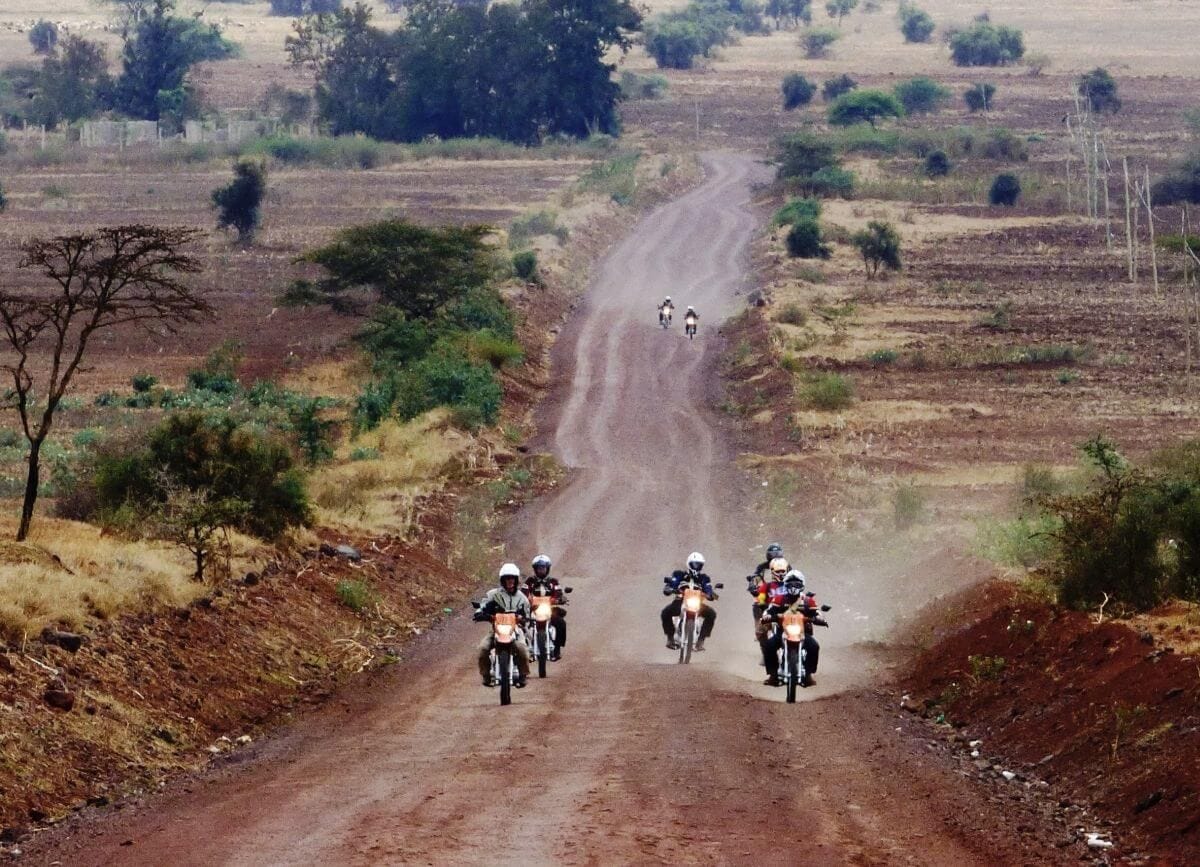
Most accidents happen when riders push beyond their skill level or ride faster than their sightline allows. Keep a safe distance, scan constantly for wildlife, livestock, and pedestrians, and don't hesitate to tell your guide if you are tired or need a break.
Drink more water than you think you need and eat properly throughout the day. Carry a small personal first-aid kit, even if the group has a larger medical kit available.
Before you travel, make sure your travel insurance explicitly covers motorcycle riding and emergency medical evacuation. It is also worth visiting a travel clinic to discuss recommended vaccinations and malaria prevention based on the countries, region, and season of your trip.
Tips That Make the Trip Easier
Train before you go. Strong legs, a solid core, and even a few hours of off-road riding beforehand will make a noticeable difference.
Pack light. Bring only what you truly need and let the support vehicle carry the rest whenever possible.
Carry local currency in small denominations, bring a spare pair of glasses or contact lenses if you use them, and don't forget lip balm you will use far more than you expect.
Learn a few words of the local language, and always ask before taking photographs of people.
Finally, whenever possible, travel with an experienced guide or a reputable group. If you decide to ride independently, make sure you thoroughly research the country, the specific region, road conditions, local regulations, and current safety advice before setting off. A little preparation goes a long way in East Africa.
Originally published at jadepeak.com.
