

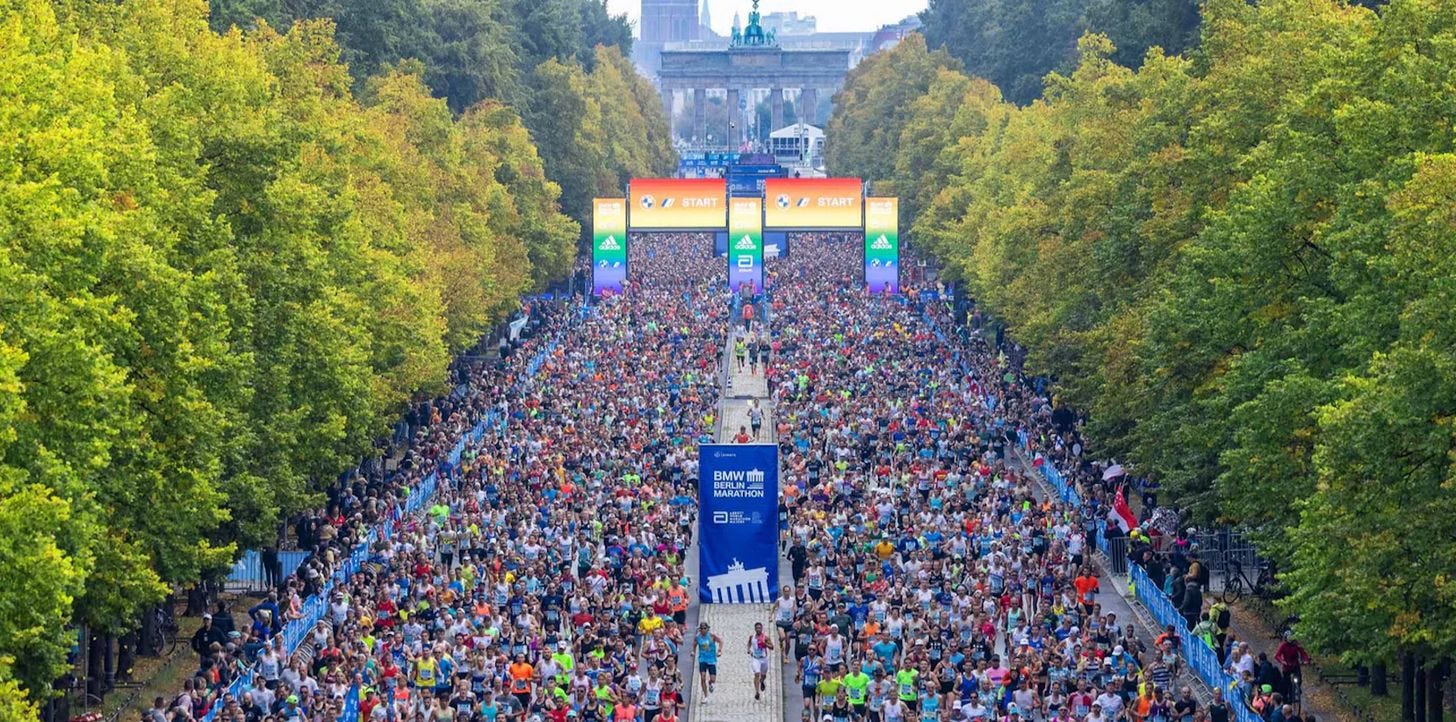
This is for runners or people who don’t really consider themselves runners, but somehow still end up signing up for a marathon and thinking “what the hell am I doing?”
People who train after work, follow a plan loosely, maybe track some runs on Strava, and occasionally wonder what a “good marathon time” actually means in real life.
We get it. We’ve all been there.
And if you are using Strava, we’ll make this simple for you here.
If you ask the internet, you’ll find a wide range of answers
Why? Because there isn’t just one type of runner.
There are elite athletes, age-group competitors, people who have trained for years with structure… and then there’s your friend who had a beer last week and still decided to run a marathon. So of course the answers vary.
But even these categories quickly lose meaning once you apply them to real people. At Jade Peak we looked at this and debated it quite a bit. We think these classifications are not always efficient, but they are still useful. They help you understand where you are right now and, more importantly, set realistic and optimal goals.
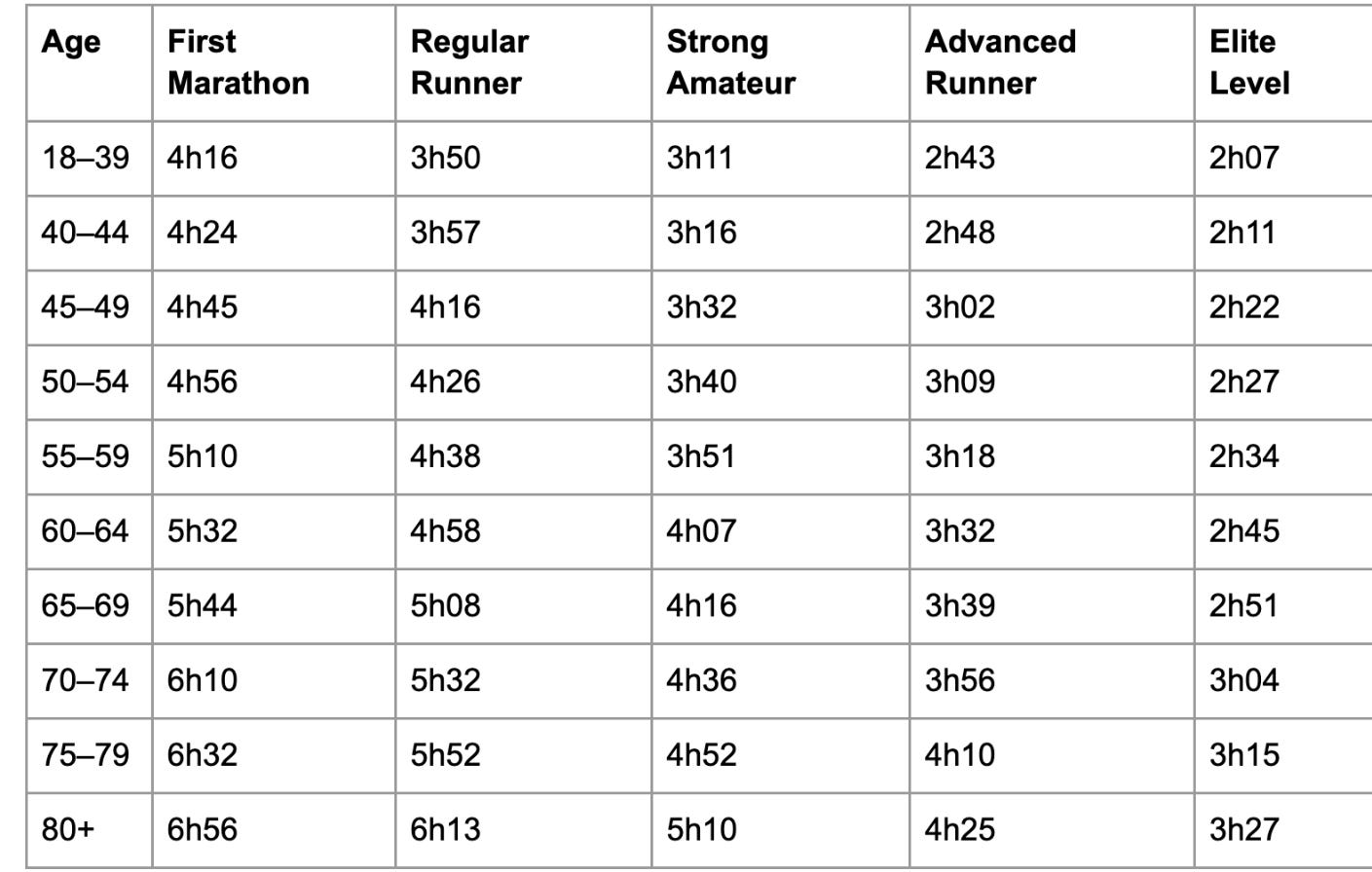
Below, we’ve included some simple frameworks we like. We found the original structure in The Marathon Handbook and adapted it for clarity.
Average Marathon Times: Male Runners
Average Marathon Times: Female Runners
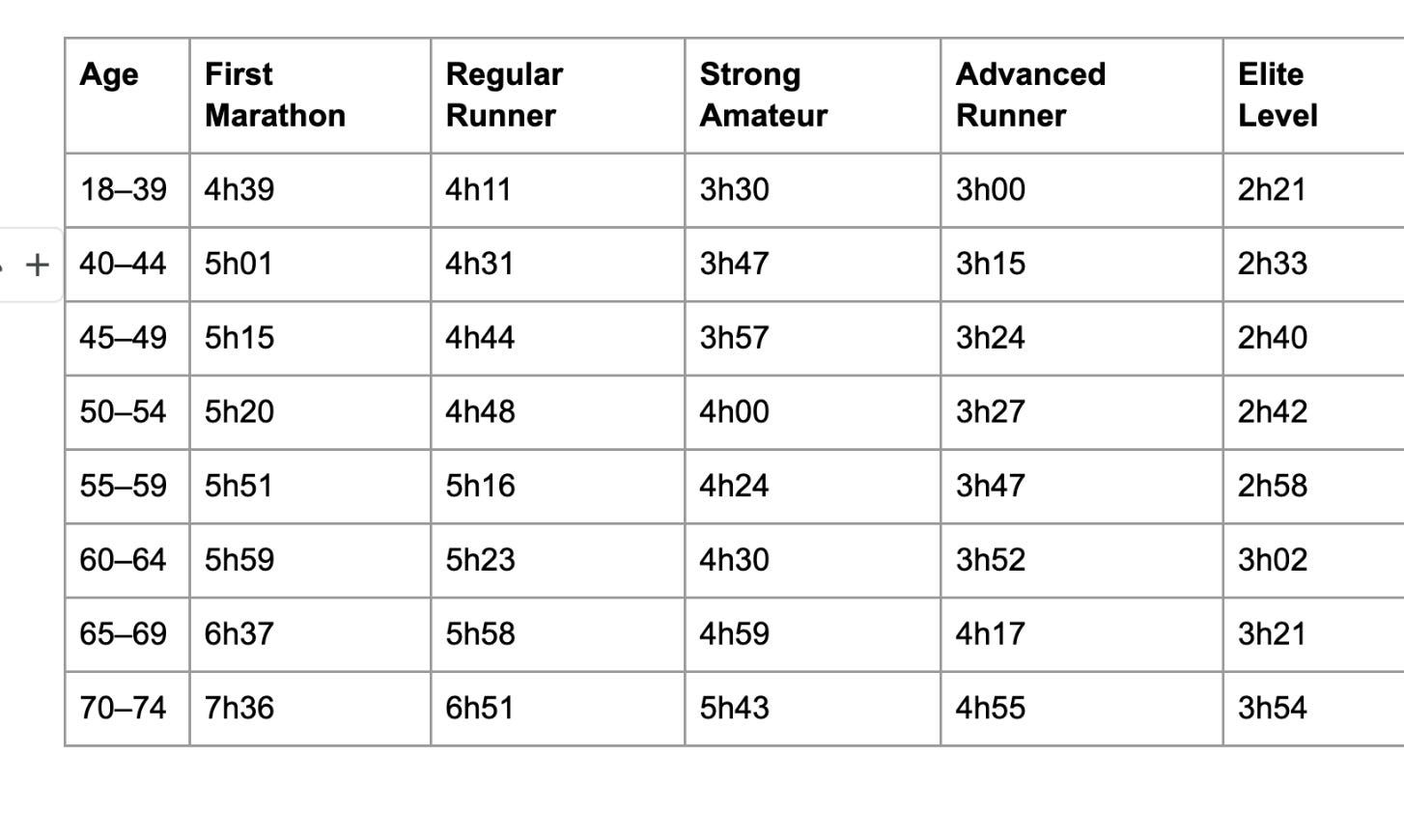
Some say the global average is around 4:30 for men and 5:00 for women, based on large race datasets. Others narrow it down further, suggesting that a “good” marathon time for recreational runners sits somewhere between 3:30 and 5:00, depending on experience, age and training history…
There are also more structured breakdowns that place “good” performances at roughly:
~3:30 for experienced recreational runners
~4:00–4:30 for average club-level runners
~5:00+ for first-time marathon finishers
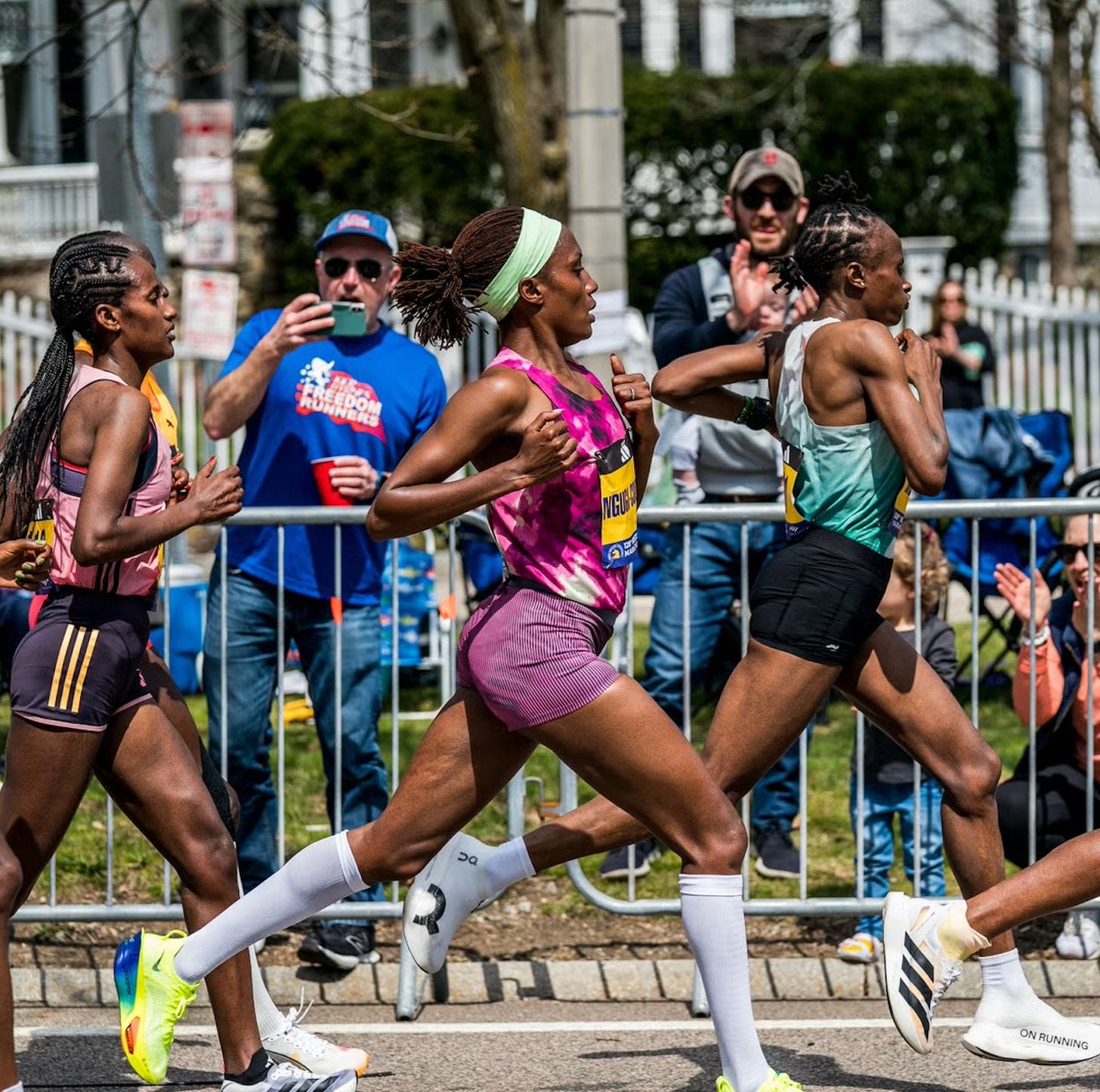
The Problem With “Good”
The word itself is the issue. “Good” depends entirely on who is asking and why.
A first-time runner just finishing 42.2 km is doing something completely different from someone chasing a Boston qualification or an age-group ranking. Yet both are often placed into the same conversation about performance. We’re seeing it more and more: running is becoming massively popular. And with that, everyone suddenly has an opinion on what a “good” marathon time is.And honestly, it makes you want to say something very simple: “Sure, Dave… maybe not the best time to give coaching advice when your last run was back in school PE class.”
What it’s clear in Jade peak that It’s is a mix of:
Training history
Consistency
Pacing
And how well everything holds together after 30 km
What the Data Actually Shows
Large datasets of marathon results (millions of finishes worldwide) consistently show that the global average sits somewhere around 4:20–4:30 for men and 4:45–5:00 for women, depending on the sample.
More detailed analyses suggest that a broadly “solid” recreational performance sits closer to:
~3:30–4:15 for trained amateur runners
~4:15–5:00 for casual runners with structured preparation
But even this misses the most important point. Most runners don’t fail because they chose the wrong target time. They fail because they go out too fast. If there is a useful definition of a “good marathon time” for non-athletes in our point of view: Is one where you run the second half with awareness, not survival.
It is a pace you can maintain without breaking down completely in the final 10–12 km.
Our honest truth
How well you manage energy over time it’s the answer. That’s the reason why, for most non-athletes, the most useful version of “good” is not a number at all.
Originally published at jadepeak.com.
