

Disclosure
Jade Peak writes about places, experiences, and the people behind them, so hotels, operators, and companies come up often. We have no financial relationship with any entity named in this article. If that ever changes, we'll say so plainly, right here at the top.

It's almost impossible to talk about women's wellness without Goop entering the chat. Gwyneth Paltrow's company started in 2008 as a simple email newsletter and grew into a full lifestyle empire. It's a brand people have strong opinions about, and it's taken its share of teasing online over the years, but love it or not, it's hard to argue it hasn't left a mark.
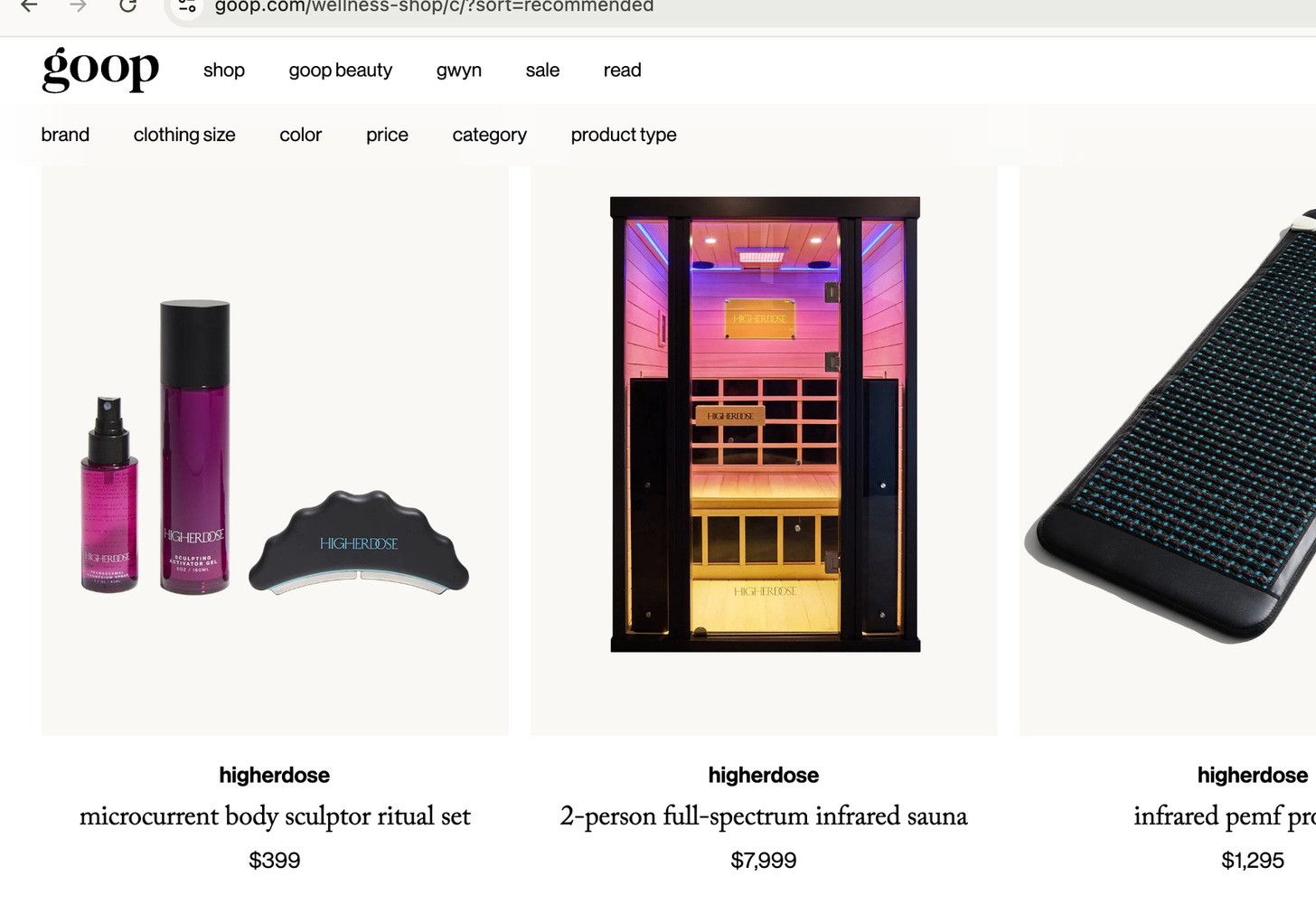
So what does Goop actually do? Quite a lot. Over time it has expanded into beauty (Goop Beauty, plus the more affordable good.clean.goop), fashion (its G.Label line), food (the Goop Kitchen delivery service), a string of retail stores, a popular podcast, a Netflix docuseries, and its In Goop Health summits. On top of that sits a wellness catalogue aimed squarely at women, spanning supplements, skincare and sexual wellness. It's a whole world, and one built specifically with women as the customer.

The bigger thing Goop did, though, was cultural. It brought topics like menopause, hormones and sexual health onto a glossy mainstream stage at a time when very few brands were talking about them openly, let alone selling around them. Whatever you make of the individual products, Goop helped turn women's wellness into a proper commercial category, and plenty of brands that came later are walking through a door it opened.
It hasn't been without controversy. Goop has faced criticism for wellness claims that ran ahead of the evidence, and in 2018 it settled a case in California over some of them. That tension, between wellness as aspiration and wellness as science, has followed the brand ever since, and it's a fair thing to keep in mind as a reader.
Lately the empire looks like it's recalibrating. Goop has been through several rounds of layoffs, narrowed its focus to fashion, beauty and food, and by 2026 was trimming staff again as it leaned into AI. The sprawling, everything-for-everyone version of Goop has quietly become smaller and more focused.
Conclusion
Which is maybe the most telling part. The category Goop helped popularise, wellness designed specifically for women, is now far bigger than Goop itself. What began as one celebrity newsletter helped kick off an entire wave of brands and products built around women's health and daily routines. Goop was early, loud and divisive. But it read the room correctly: wellness built for women was going to be one of the defining consumer stories of the decade, and it still is.
Originally published at jadepeak.com.
