

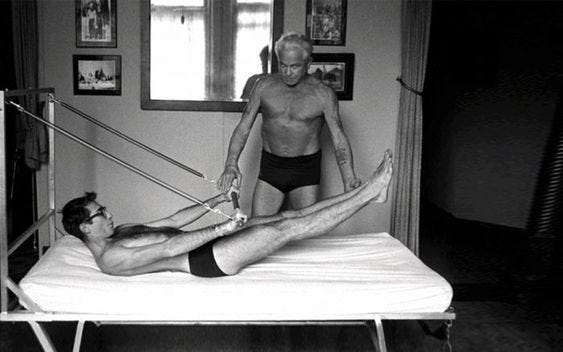
Every reformer studio with good lighting and a €30 drop-in class owes its existence to something far less glamorous: a prisoner of war camp on a small island in the Irish Sea. It's one of our favourite origin stories precisely because nobody expects it.
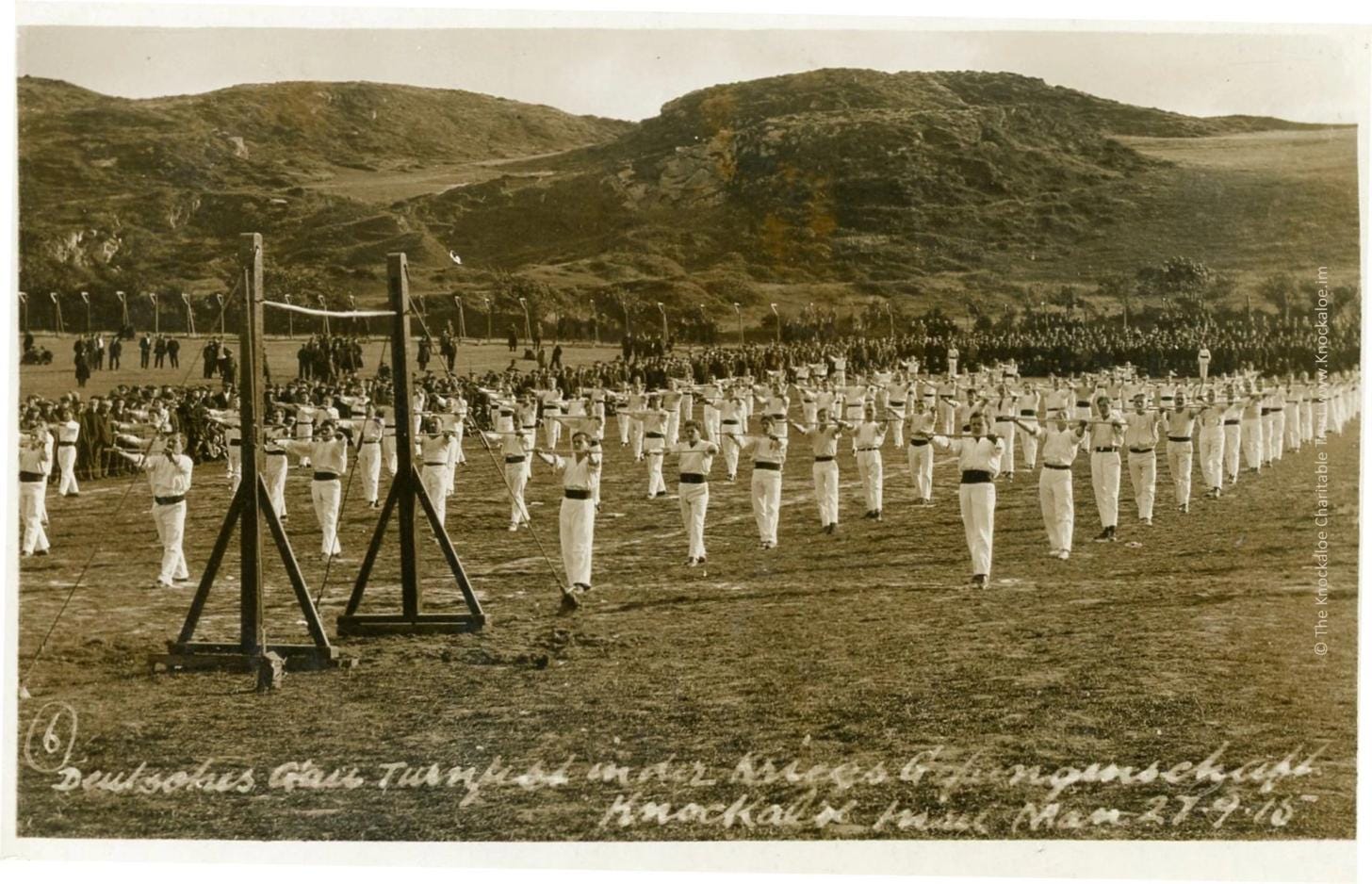
Joseph Pilates was born in Germany in 1883, a sickly kid who grew into a boxer, gymnast and circus performer. He moved to England around 1912, which turned out to be terrible timing. When the First World War broke out, Germans living in Britain were rounded up as "enemy aliens," and Pilates ended up interned on the Isle of Man, at a camp called Knockaloe, for the best part of four years.
Making the best of a barbed-wire situation
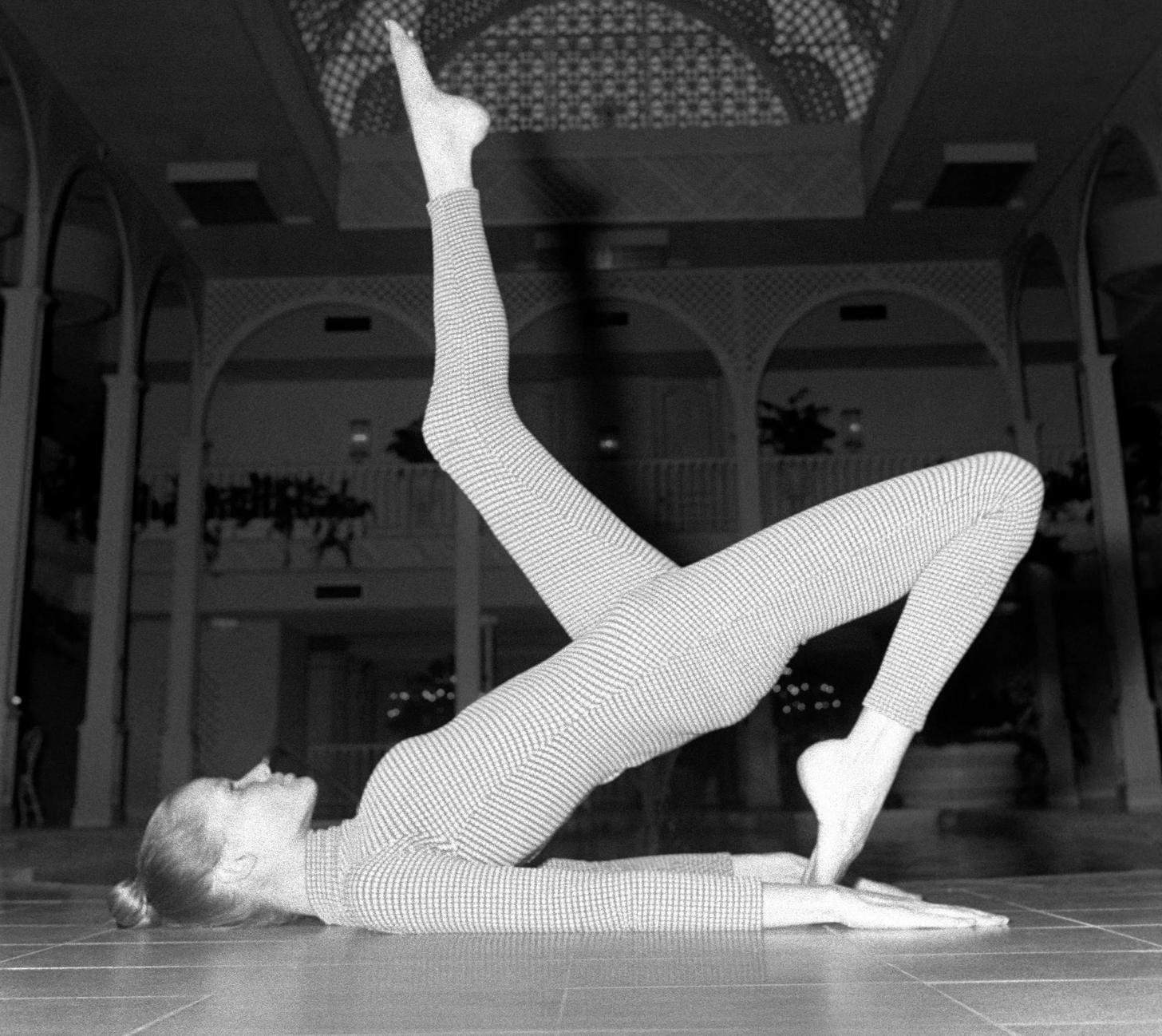
Confinement did strange things to people. A Swiss doctor of the era even coined a name for it, "barbed-wire disease," to describe the mental toll of being locked up indefinitely. Pilates' answer was movement. He led exercise sessions for his fellow internees, built a system of slow, controlled bodyweight movements he'd later call "Contrology," and borrowed ideas from German gymnastics, yoga and, famously, from watching the camp cats stretch and move.
Then there's the legend everyone loves: that while working in the camp hospital, he rigged springs onto the bed frames so bedridden patients could exercise lying down, inventing the ancestor of the modern reformer. Historians are sceptical about the exact details, but the story stuck, and it's a good one. He also claimed not one of his internees died in the 1918 flu pandemic thanks to his conditioning. No evidence for that, but the man was never short on confidence.
From Hamburg to a New York boxing gym
After the war he returned to Germany and worked in Hamburg. When the rising Nazi government reportedly wanted him to train the new army, he decided it was time to leave. In 1925 he sailed for America, and on the crossing met Clara, who became his wife and lifelong collaborator. They opened a studio in New York, conveniently close to the boxing world he came from and, as it happened, to the dance world.
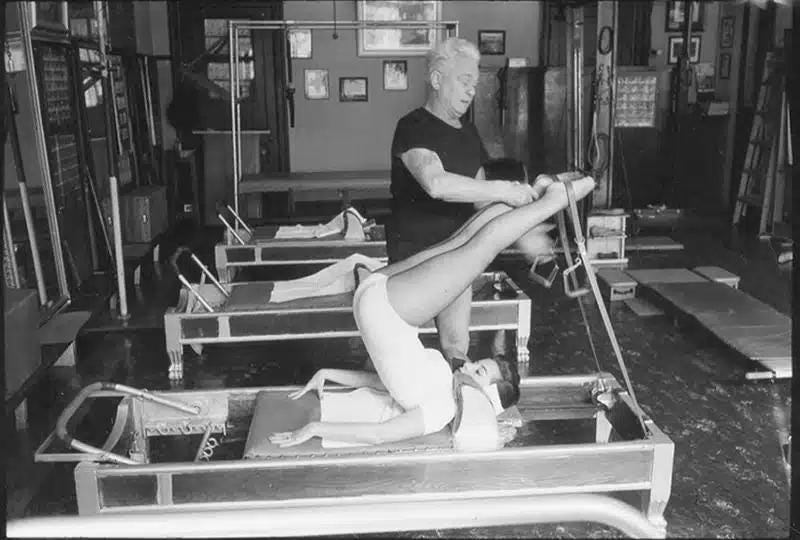
That proximity is why you know his name today. Dancers were the ones who took to him. George Balanchine sent his ballerinas over for conditioning and rehab, Martha Graham's company trained there, and this small, loyal following kept the method alive.
The irony is that Joseph died in 1967 a little disappointed. He'd wanted Contrology to be a global system for everyone, and instead felt it had been quietly claimed by dancers. "I'm 50 years ahead of my time," he liked to say. If anything he was underselling it. It was those very dancers who eventually carried his method out into the world, and from the 1980s onward it exploded into the studios, reformers and fully booked timetables you see now.
So next time you're strapped into a reformer in a beautifully renovated space, paying by the class, spare a thought for Knockaloe. Not bad for something invented behind barbed wire.
Originally published at jadepeak.com.
