

Disclosure
Jade Peak writes about places, experiences, and the people behind them, so hotels, operators, and companies come up often. We have no financial relationship with any entity named in this article. If that ever changes, we'll say so plainly, right here at the top.
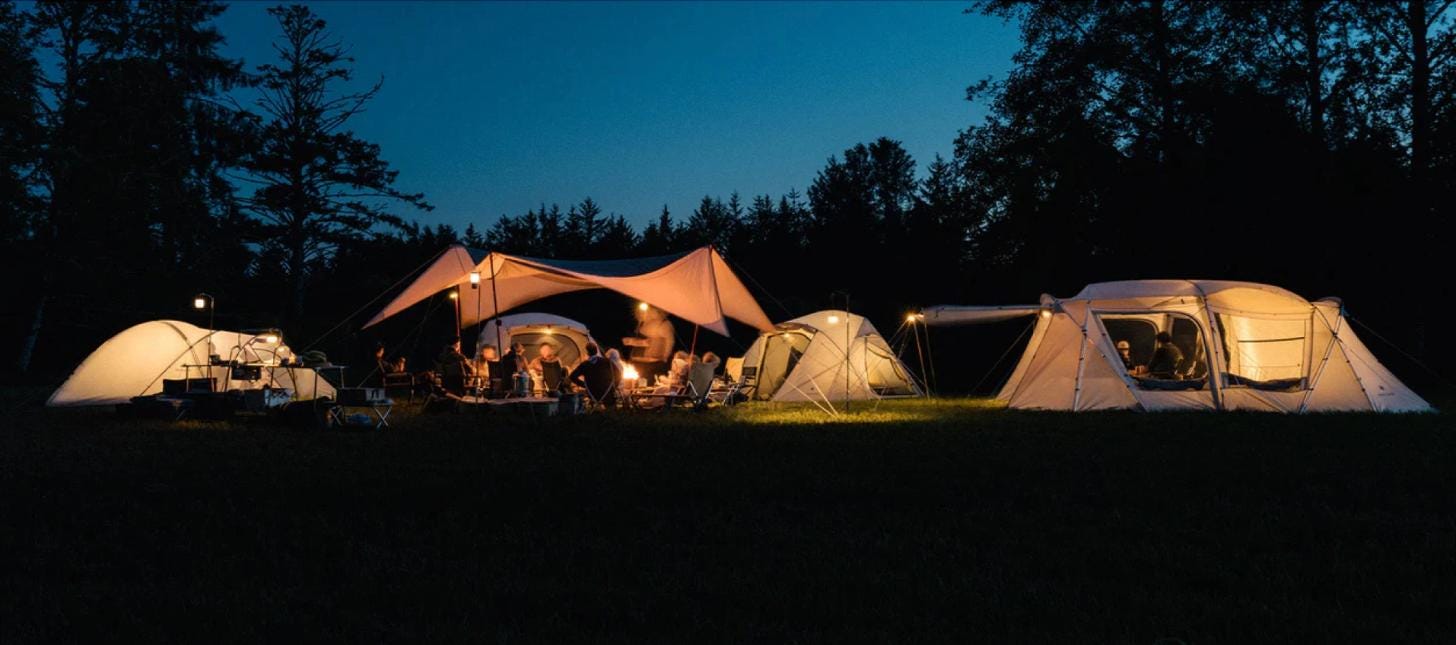
Japanese design has been influencing everything for a while now, from that café you were meant to try last Saturday because it was “absolutely essential” according to your saved list, to outdoor brands that quietly redefine what camping even means. Camping, but at a different level. Nothing like what you did as a kid, surviving on chocolate bars and the vague suspicion that sleep might not fully happen. We came across Snow Peak because the style caught our attention. It has that same quiet, functional aesthetic that we naturally gravitate towards.
History
Snow Peak comes from a very specific place in Japan: Sanjo City, Niigata, over 60 years ago. A region where seasons are not a concept but a condition you actually have to live with. Heavy snow, humidity, changing terrain. The kind of environment that doesn’t really care about design narratives or branding exercises, or about someone filming a perfectly framed snowboard run in what looks like the most remote, cinematic slope you’ve ever seen.
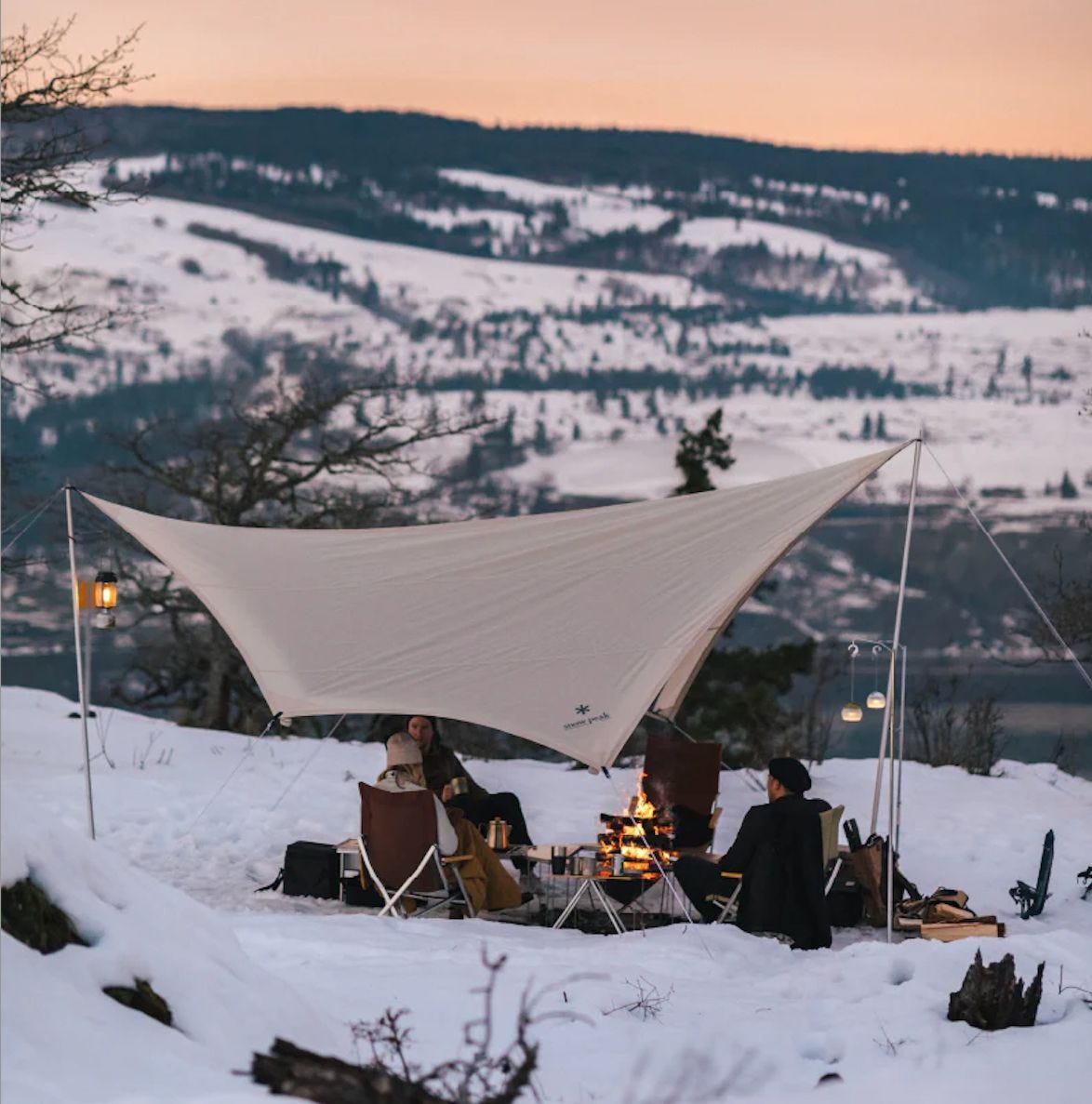
That origin still shapes the brand today. Snow Peak built simple, functional equipment with the kind of quiet efficiency Japanese brands seem to do exceptionally well. A bit like Uniqlo, what started as something practical slowly became part of a wider aesthetic. You now see Snow Peak as often in trendy city neighbourhoods as you do at campsites. That Snow Peak mug is probably the next thing you or that friend who carries a Stanley cup absolutely everywhere will end up buying.
The difference is that the products still do exactly what they were designed to do. They work.
Simplicity wins
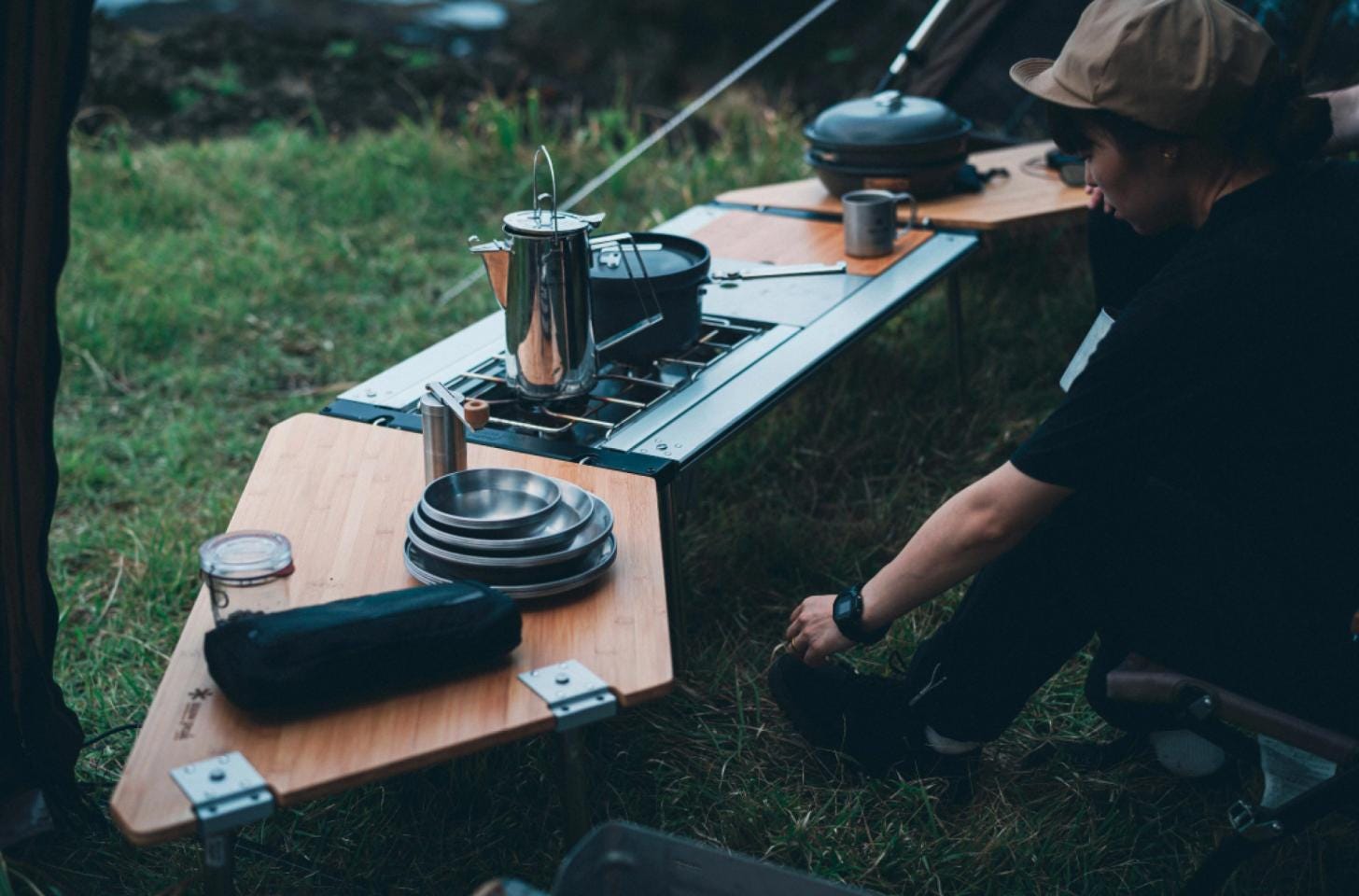
And yet, at its core, Snow Peak is still very literal. A spoon is a spoon. A BBQ is a BBQ. A chair is a chair. It doesn’t need reinterpretation to justify itself.
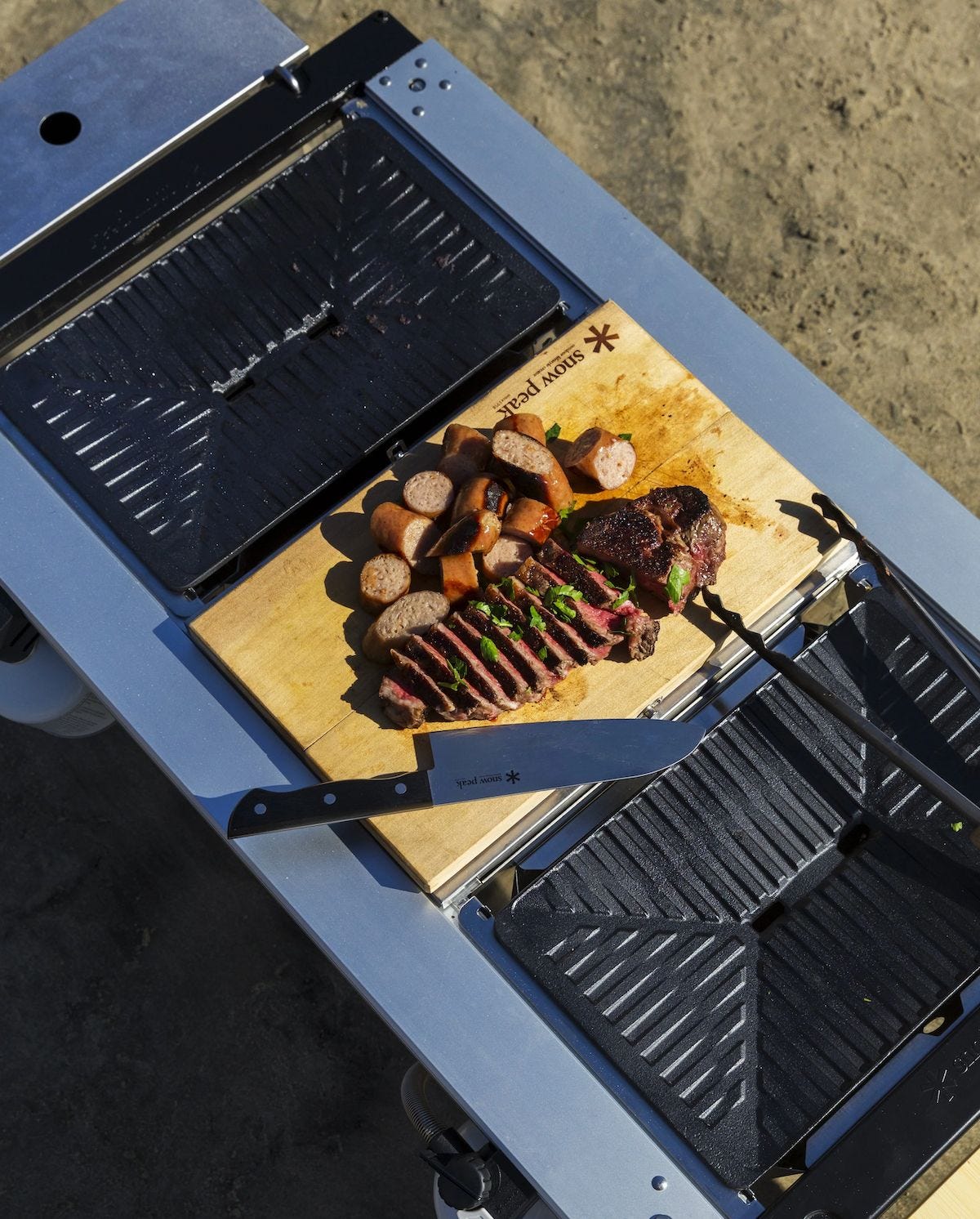
That simplicity is probably why it travels so well. Simply looking at Snow Peak’s grills is enough to make us believe we could become a younger Gordon Ramsay for an afternoon.
Driving trends in cities
Snow Peak gear exists in that strange space where something originally made for difficult, practical use ends up appearing in places that look more like curated outdoor studios than actual camping. The same system that once had to survive harsh weather is now also part of the visual language of perfectly styled fireside dinners and those Korean BBQ-style setups you scroll past on TikTok that somehow make camping look like the most expensive dinner reservation in the world, not the slightly chaotic thing you once did at a festival in August.
And somehow, both versions feel equally “valid” now.
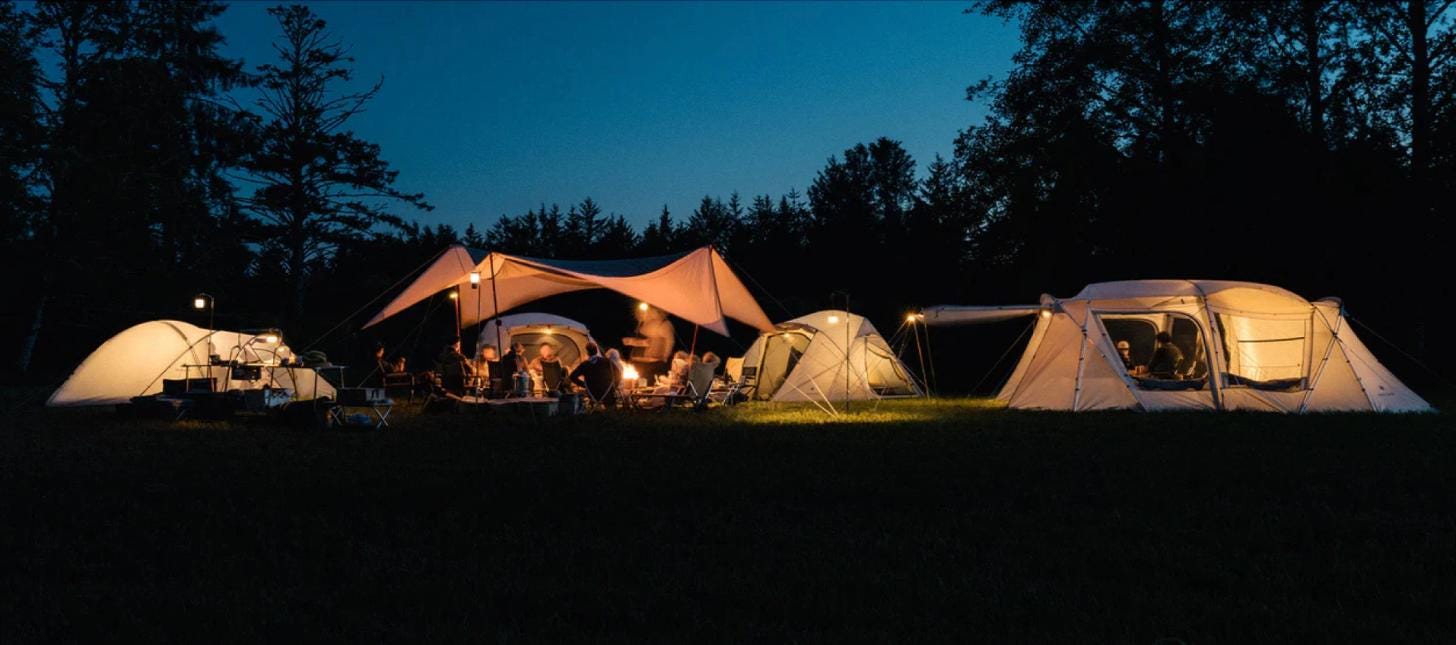
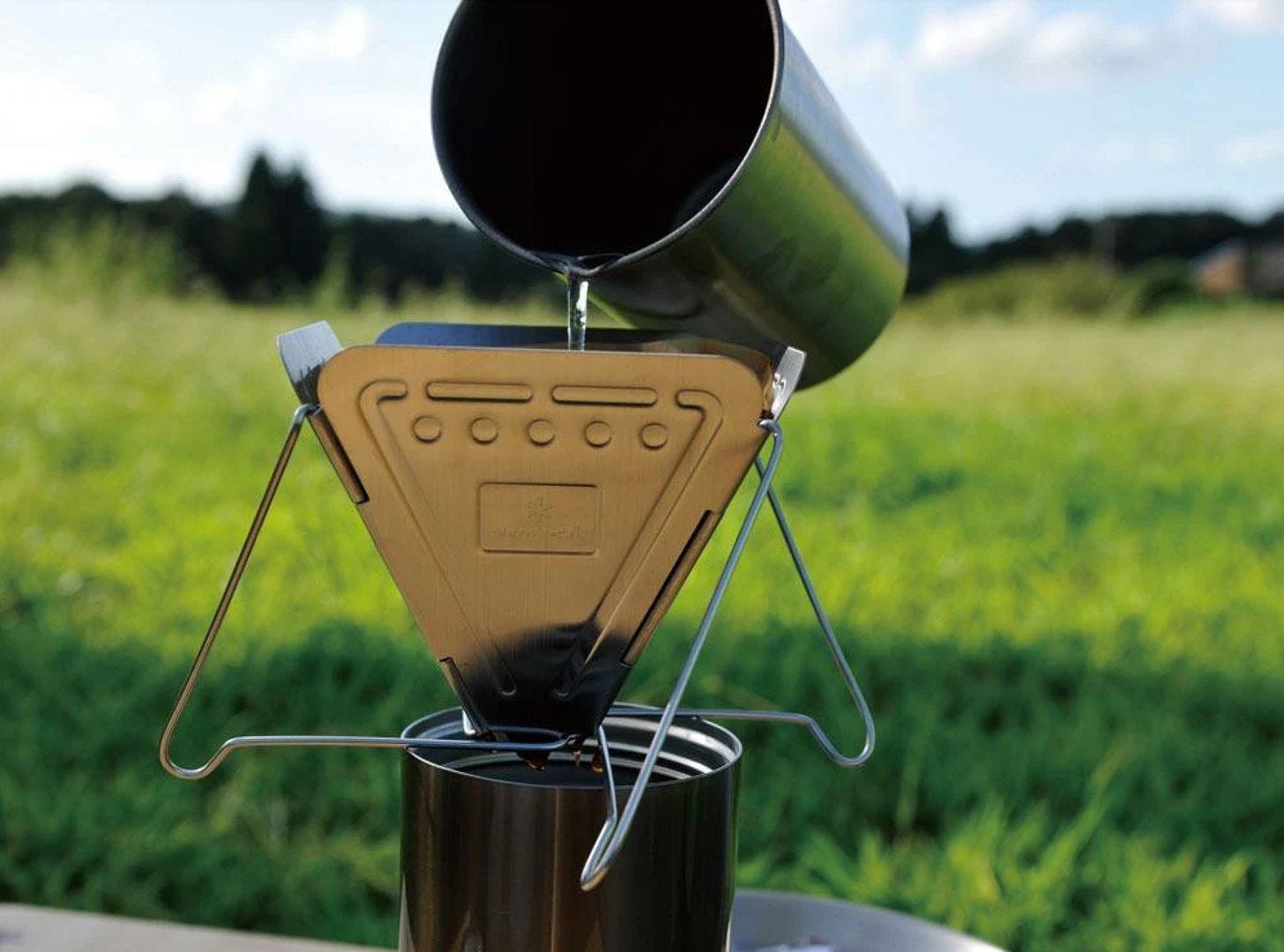
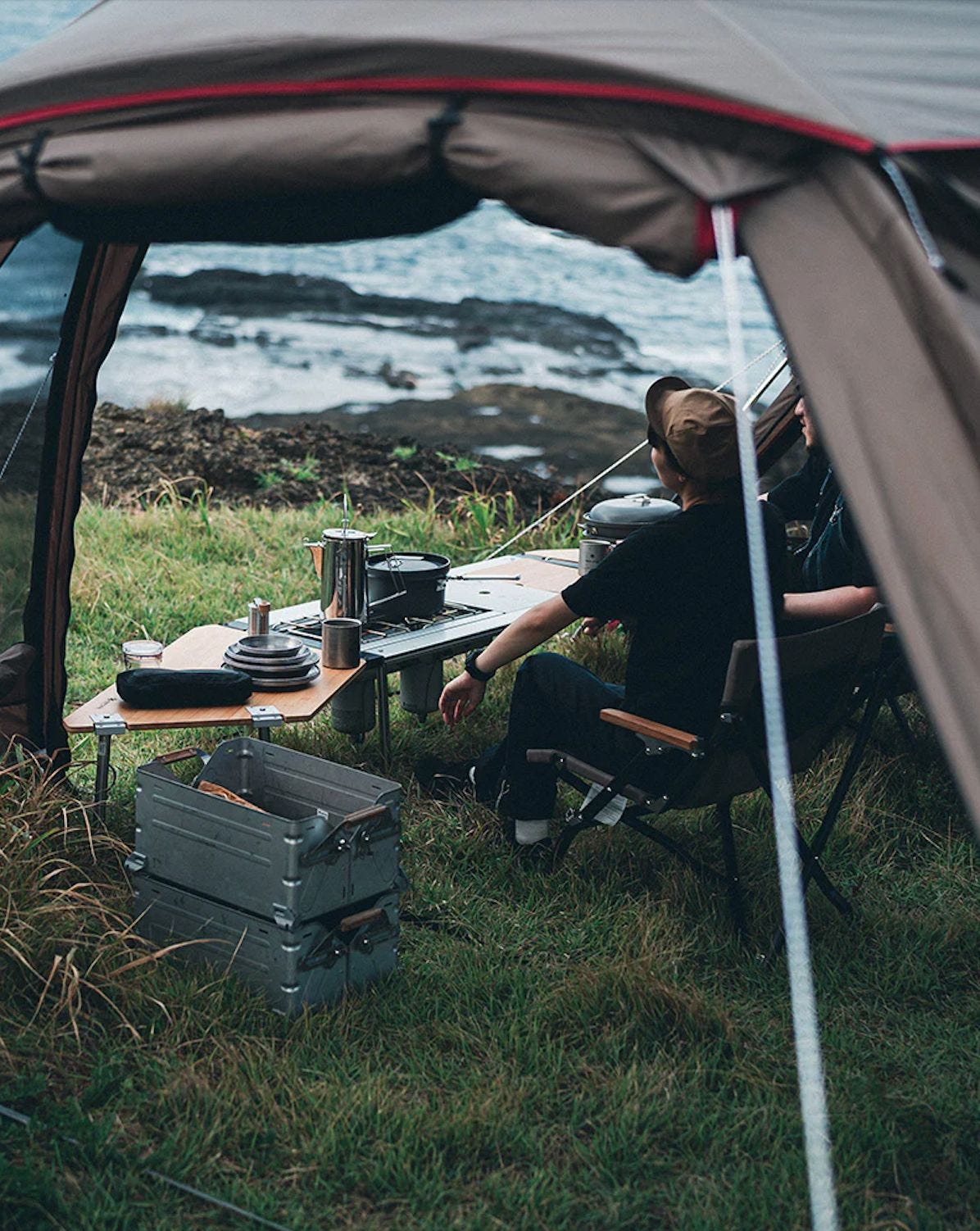
Since 1999, Snow Peak has expanded beyond Japan, including a presence in the United States, where the brand opened stores and hospitality spaces that extend the idea into food and gathering.There is something about Snow Peak that feels increasingly rare in the West but still very familiar in Japan: a respect for doing things properly. Not faster. Not optimised. Just properly. Whether it is cooking over a grill, making a cup of coffee, or setting up camp, there is an appreciation for the process itself, not just the result.
Our approach
Maybe that is also why it resonates with us. As a couple, we often feel like every outdoor activity has become increasingly complicated. More technology. More products. More things to buy. More instructions for something that was originally supposed to be quite simple.
Snow Peak feels like a quiet reminder that not everything needs to be optimised. Sometimes you just need a good grill, good company, and enough patience to wait until the fire is ready.
Preferably with a piece of wagyu on top.
Snow Peak did not ask to be featured here. We discovered the brand ourselves, liked what it was doing, and thought it deserved a place on the website.
Originally published at jadepeak.com.
