

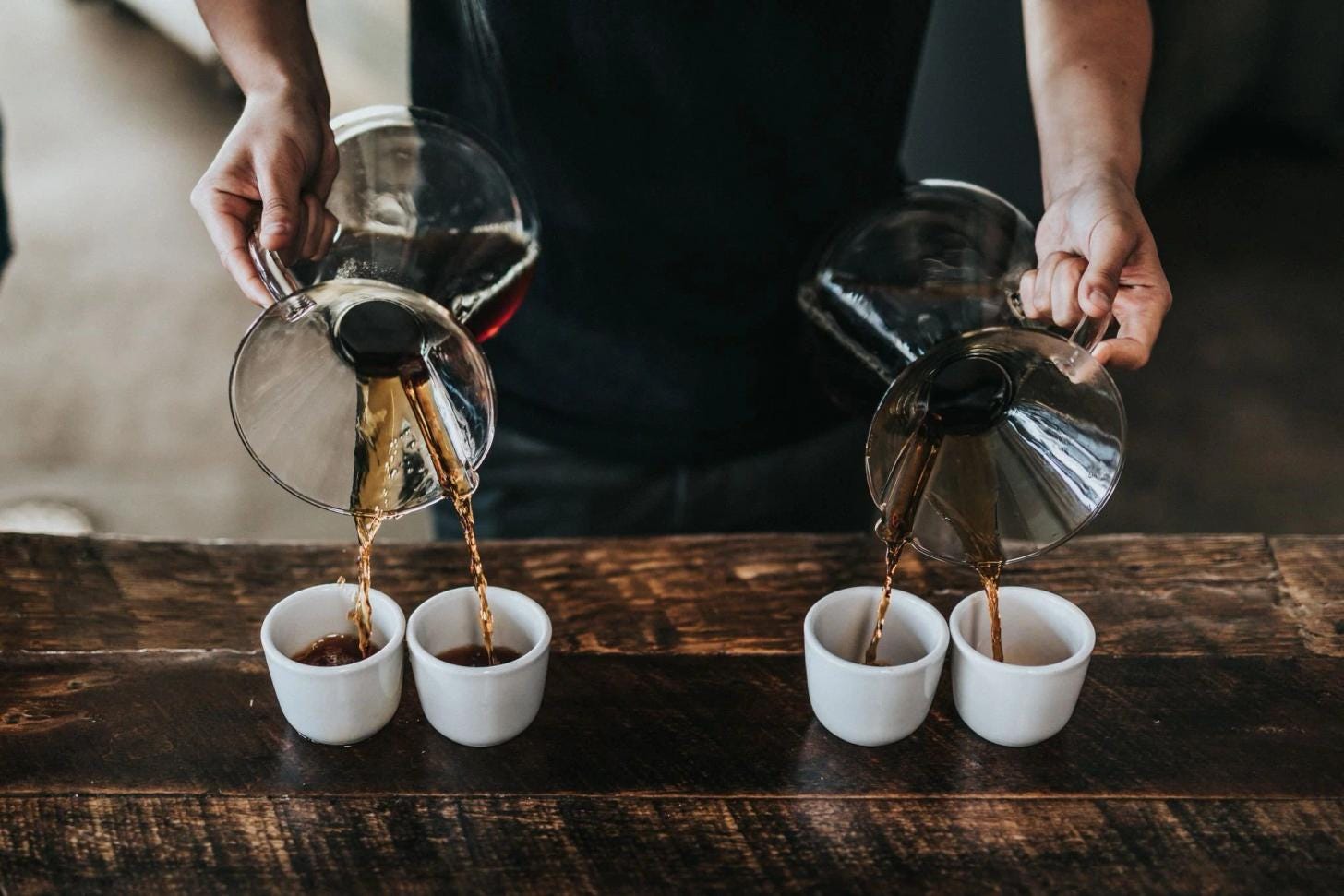
We like coffee. Probably in the same way you do.
You wake up, you think about that first cup. The moment it hits, the day starts. That first sip is JUST GLORY.
In Sweden, they have a word for it: fika is that pause where everything begins.
One of the co-founders of Jade Peak here even did his final degree project on coffee. So this is not an outside interest and still, the question keeps coming back.
Is specialty coffee actually better, or just more expensive coffee with a different story?
The difference
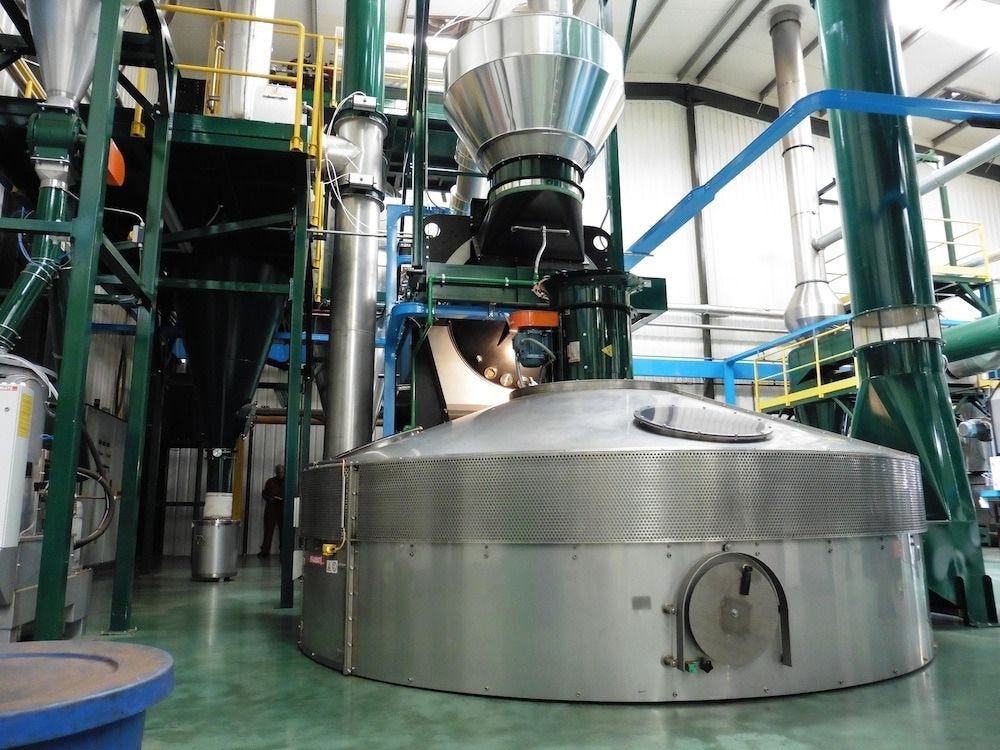
Most coffee people drink every day is designed for consistency. It is blended from different origins so it tastes broadly the same all year round, whether the harvest changes or not. Roasters are not trying to highlight differences between farms. They are trying to remove them so how do they do it? It means combining beans from multiple sources, then roasting them in a way that smooths everything into one familiar profile. Something that works with milk, sugar, machines, and volume. That is why the coffee you grew up drinking in your local bar, or the first coffees you had in your life, often taste broadly similar
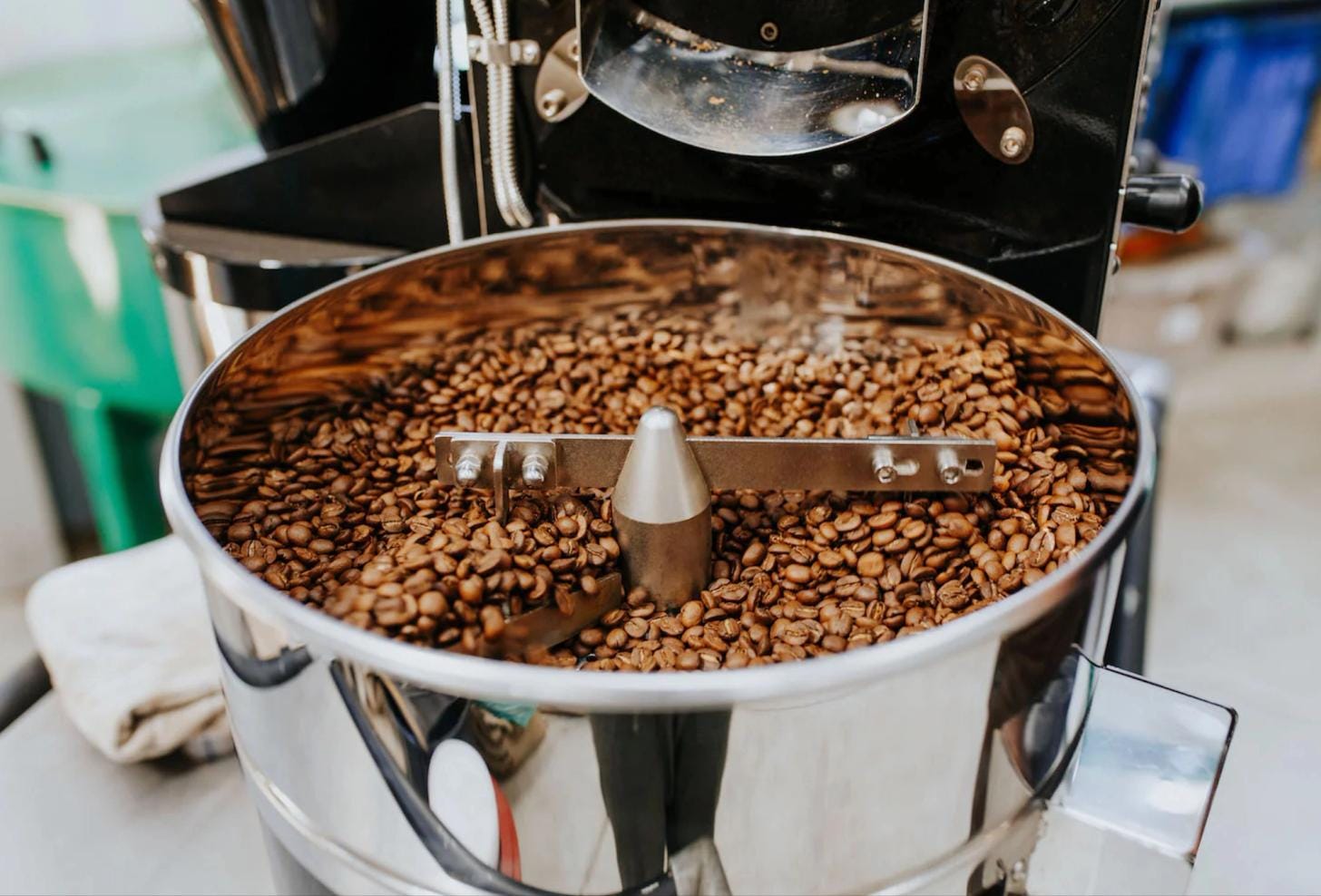
Specialty coffee works the other way around. Instead of hiding variation, it keeps it visible. Beans are selected from specific farms or even specific plots. They are sorted more strictly before roasting. Defects are removed more aggressively. Processing methods are kept separate instead of mixed into one blend. It ends up with a more defined cup.
The health question is usually misplaced
Coffee in general is often pulled into health conversations as if it behaves like a supplement. Most of its effects come from well-studied compounds such as caffeine and polyphenols, which are present across almost all coffee types. If you did not read about this, you should.
The difference between specialty and commodity coffee is not a transformation of coffee into something fundamentally healthier. It is a difference in quality control, freshness, and processing consistency. Freshness plays a role in how coffee is perceived in the cup. Over time, exposure to oxygen naturally reduces aromatic intensity and softens complexity. Specialty coffee can reflect this more clearly because it is usually handled with tighter control over sourcing, roasting, and distribution timelines.
In practical terms, most of what people associate with coffee’s effects is already present when drinking regular black coffee that is reasonably fresh and properly prepared.
Where specialty coffee differs is not in redefining what coffee is, but in how consistently that expression is preserved.
Claims around precise freshness windows should be treated carefully. Freshness is shaped not only by roast date, but also by storage, transport, and preparation. If you go to an Airbnb and there is coffee from God knows when, well… you might debate whether to have it or not. Maybe you should check it and store it in a dry, cool, and dark place. That’s usually the best option.
There is also a more practical layer that often gets overlooked. If a coffee is difficult to drink on its own, people rarely leave it as it is. It gets adjusted with sugar, syrups, sweeteners, or milk.
The conclusion here at Jade Peak is that what it can change indirectly is what people stop adding to the cup. When coffee is naturally more balanced, there is less need to modify it in order to make it drinkable.
Originally published at jadepeak.com.
