

Disclosure
Jade Peak writes about places, experiences, and the people behind them, so hotels, operators, and companies come up often. We have no financial relationship with any entity named in this article. If that ever changes, we'll say so plainly, right here at the top.
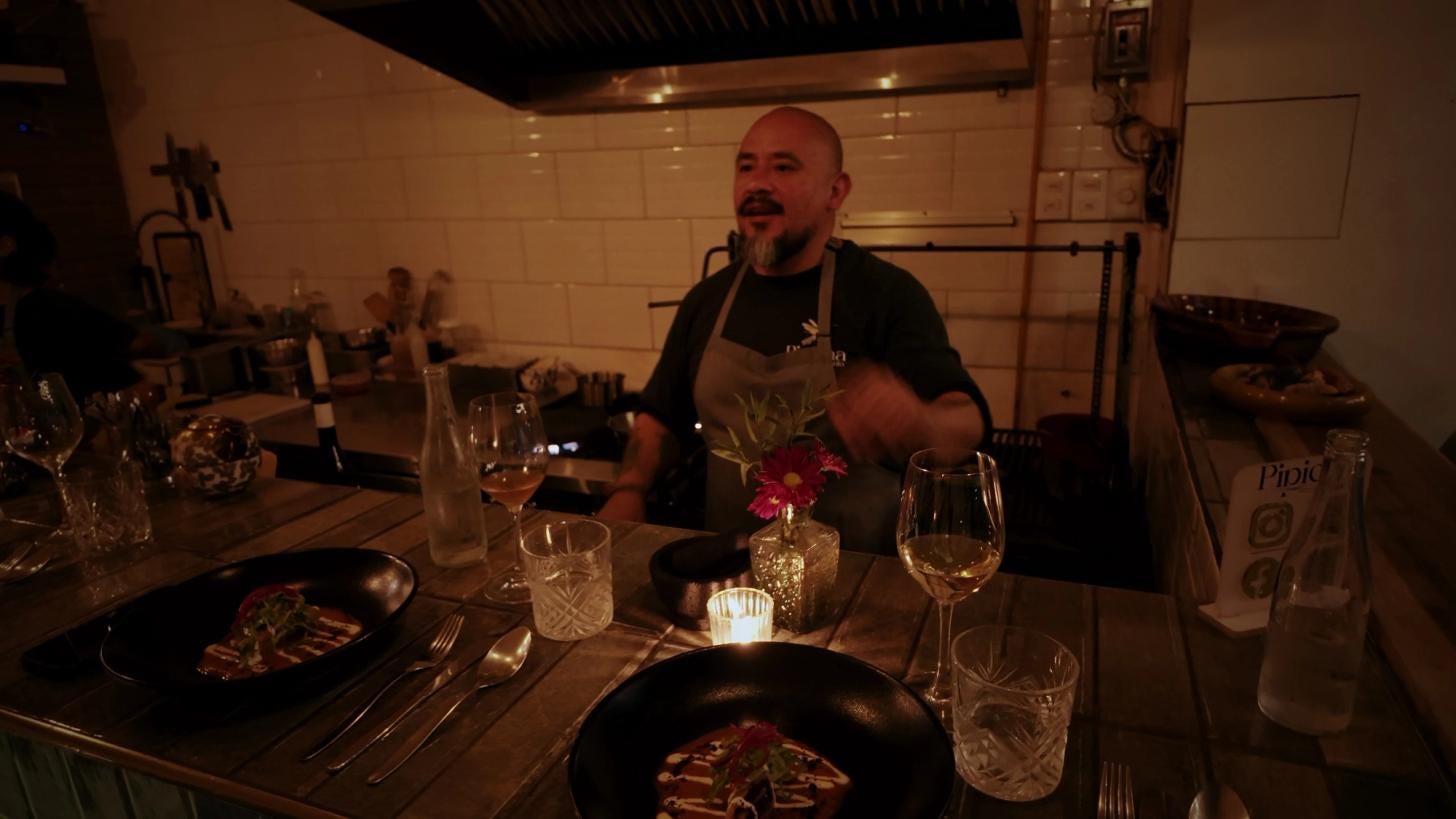
Pipicha Santa seats 10 people a night at a counter on Avenida Baja California, and the two people cooking on the other side own the place, wrote the menu, and will tell you where every ingredient came from before it reaches your plate. We took two of the seats in late June. This is what the evening looks like, and how to get one of the other eight.
Her family's kitchen, his wine list
Pipicha Santa is a couple's operation with a small crew behind it. Anita comes from a family of chefs, and it shows in the tasting menu course by course. Dishes are cooked in an open kitchen at an arm’s length from your seat and come with personal stories. Anita grew up in Chihuahua, but she and her husband Jonas draw influence from all over Mexico, moving between a charcoal grill and a few burners all night while the room watches.
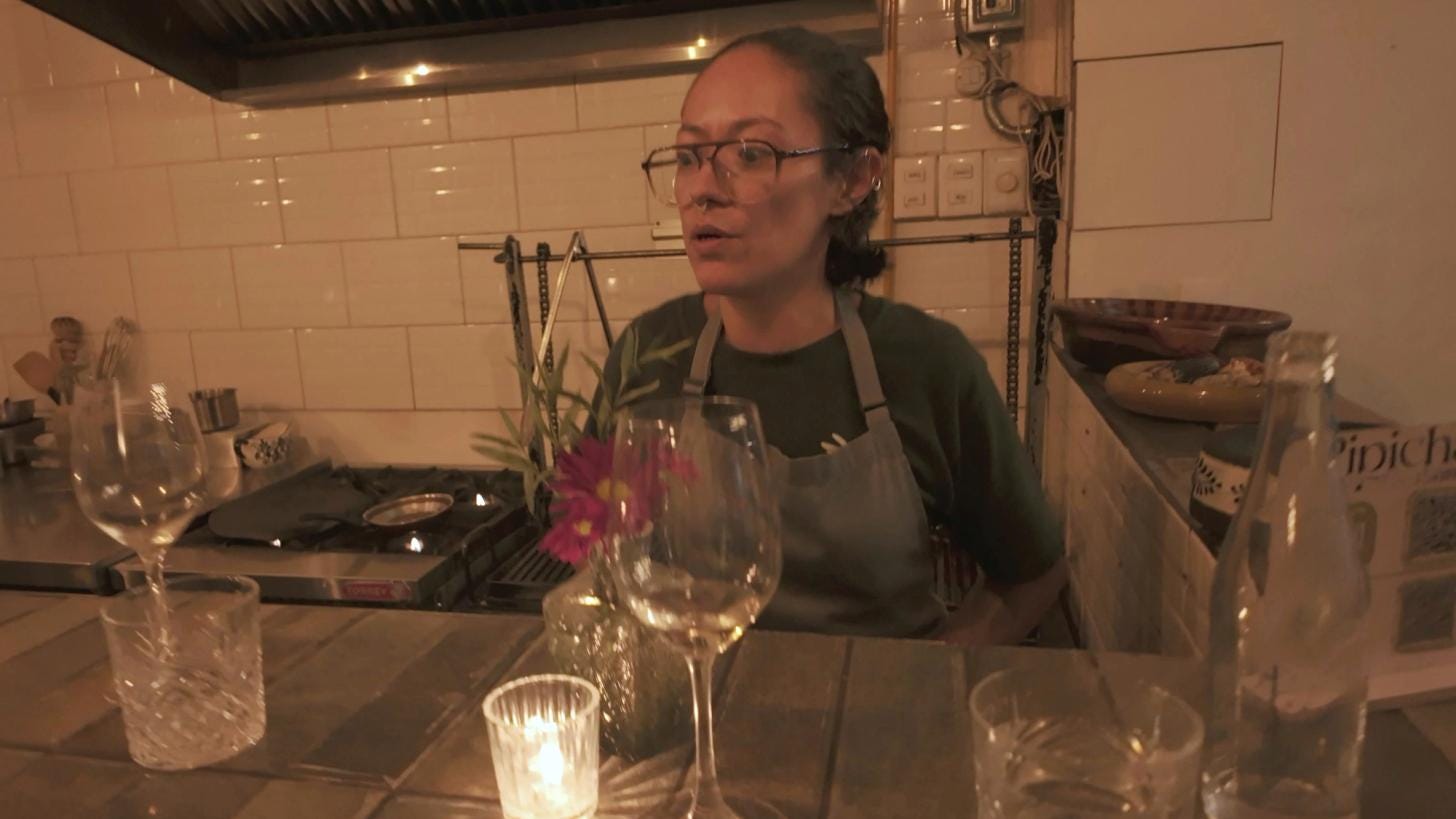
Jonas doubles as both chef and sommelier, and his wine list reads like a tour of Mexico. A Gewürztraminer from Vinaltura in Querétaro, Roganto Chardonnay from Baja California's Valle de San Jacinto, a Moscatel from Jalisco. I’d wager even most of you winos out there haven’t sampled the budding wine scene outside of Baja. The only import we spotted was a canned garnacha from Catalonia. Our first pour made it to my vivino app immediately: Bodeguero's Amber Wine 2024, an orange raised on its lees in French oak in Baja with strong stone fruit and a uniquely salty finish.
The sourcing runs far past the wine. Even the bottled water comes from a deep well near Popocatépetl, and the chamomile in the tisane is grown by an organic flower farm in Tláhuac on the city's southern edge.
While it’s a newer restaurant, we sum it up as a love letter to Mexican cuisine, its ingredients, and its people.
The menu
The restaurant’s name contains pipicha (Porophyllum linaria), a milpa herb from the valleys of Puebla, Tlaxcala, and Oaxaca, a thin-leaf cousin of pápalo that tastes like cilantro sharpened with lemon and anise. It is an ingredient that you use fresh or not at all and that seems to be the standard for the whole menu. The two of them buy from local producers around Mexico City and the menu is written from what’s available. They ferment in-house as well, from the Brussels sprout kimchi amuse-bouche to the bottled salsas racked on the counter.
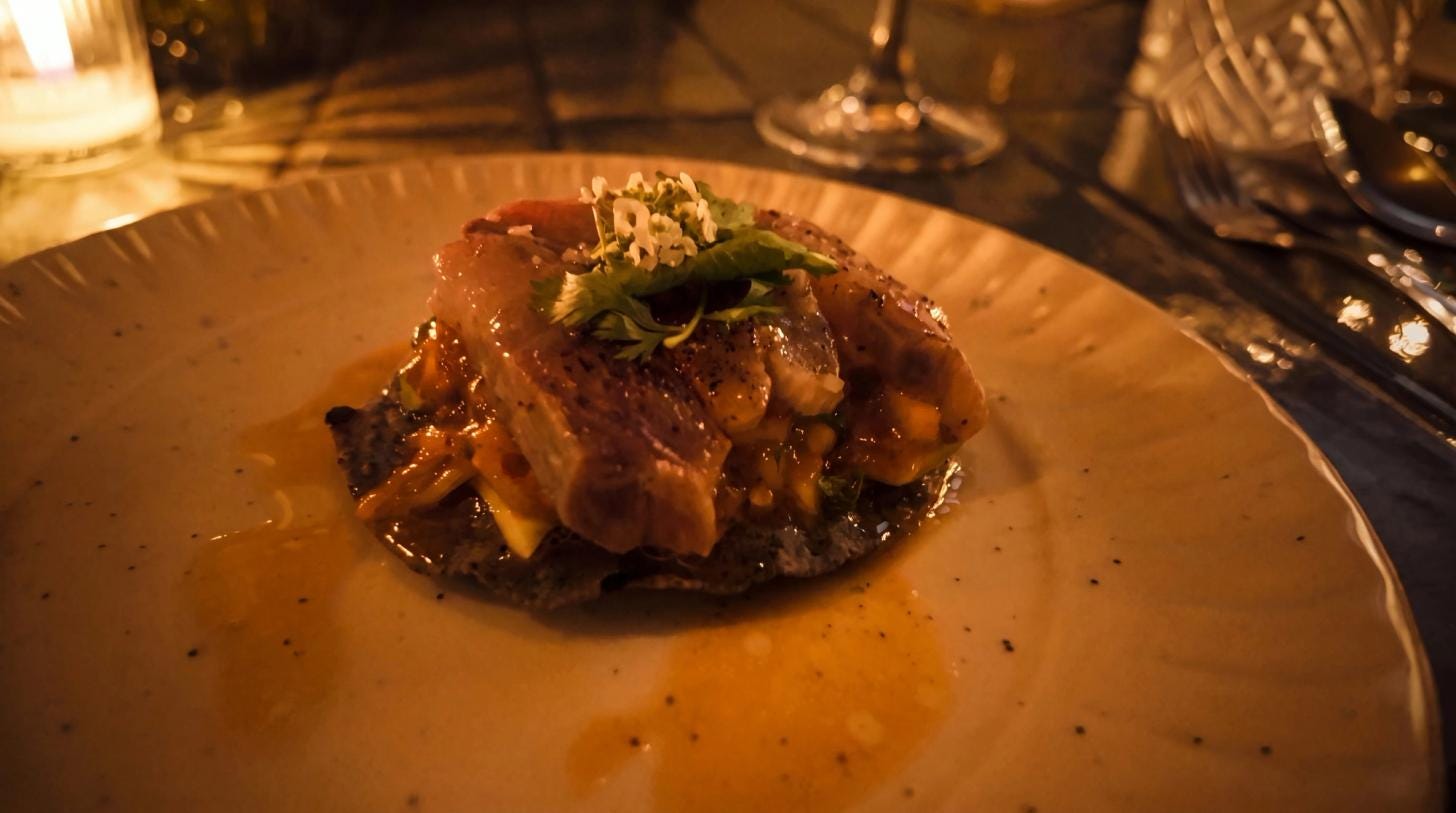
Gluten-free, vegetarian, and other variations are available on request.
Six courses, two hours
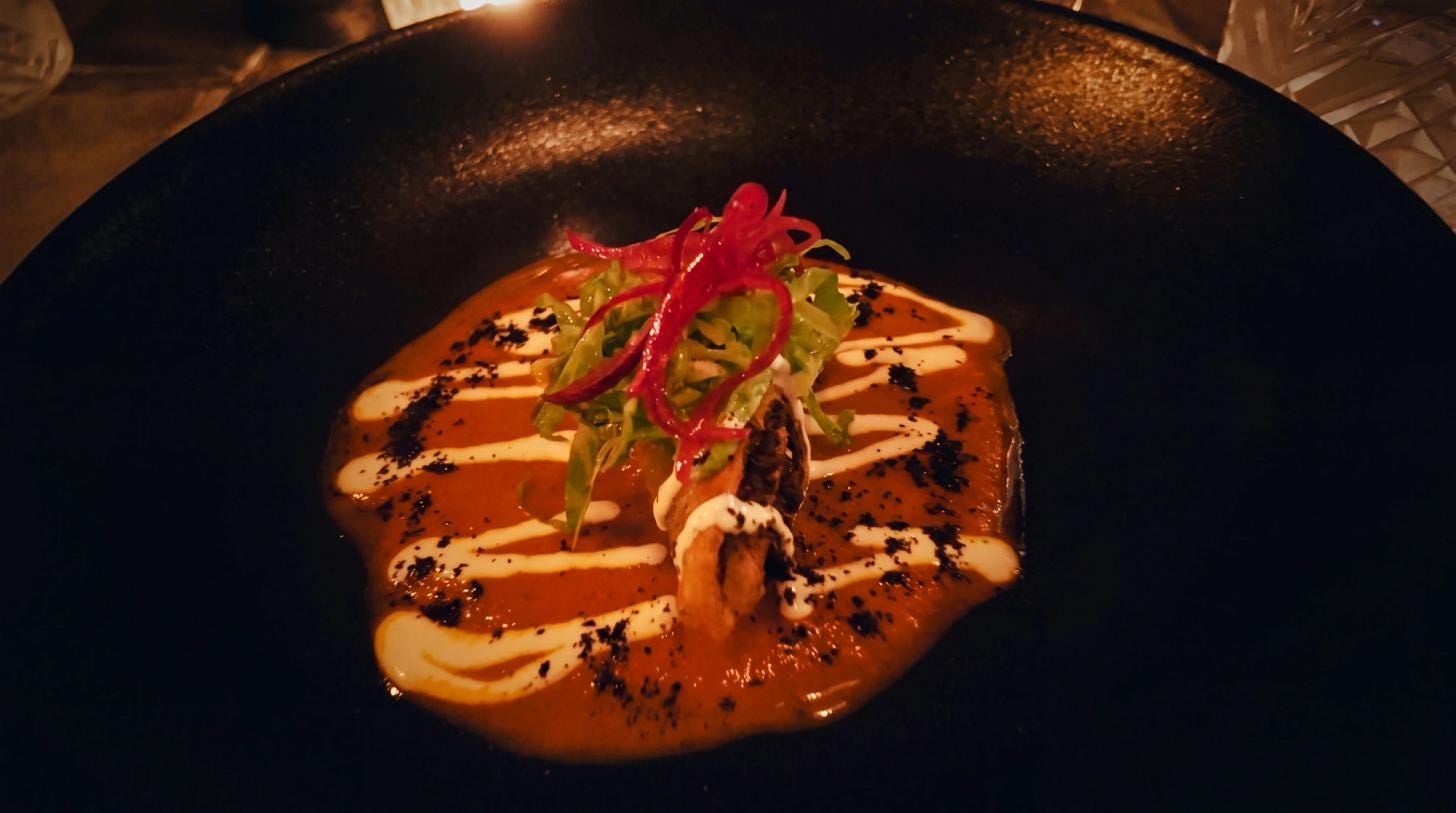
Our format was the six-course omakase (they also run a 10-course, plus à la carte), and it ran a little over two hours, featuring our favorite: a crunchy flauta arriving on a bed of creamy, árbol chili salsa. A soft, flavorful barbacoa went perfectly with the exterior crunch, while the microgreens and red onions gave the plate a delightfully colorful presentation.
Jonas pours and narrates through every course, and the bill came to around ~$150 a person, all in. That is Michelin-star money in this city, and with some tweaks to service we would not be surprised if the guide eventually agrees.
Getting a seat
Pipicha is reservation only. We went during shoulder season and there was same-day availability, but we recommend booking through their site ahead of time. The address is Avenida Baja California 365, on the Hipódromo edge of Condesa, with the dining room looking back out at the string-lit street.
This is the restaurant model that we go out of way to seek out and recommend: two owners in the room, producers named on the menu, a wine list that treats Mexico as a serious producer, and nothing about it built to become a chain.
Frequently asked
What is Pipicha Santa?
A 10-seat tasting counter in Condesa, Mexico City, run by chef Anita Pereyra and chef-sommelier Jonas Rodríguez. Six- and 10-course omakase menus are written daily from organic producers around the city.
How much does dinner at Pipicha Santa cost?
We paid $150 USD a person all in, including wine. Wines by the glass run 295 pesos.
Where is Pipicha Santa?
Avenida Baja California 365, in the Hipódromo section of Colonia Condesa, Mexico City.
What does the name pipicha mean?
Pipicha (Porophyllum linaria) is a fresh herb from central and southern Mexico, a relative of pápalo that tastes like cilantro with lemon and anise. It barely survives transport, which is the point: the restaurant cooks only what arrives fresh.
Can Pipicha Santa handle vegetarian, vegan, or gluten-free diners?
Yes. Each is cooked as its own tasting menu rather than a subtraction. Tell them when you reserve, since the menu is written the same day.
Originally published at jadepeak.com.