

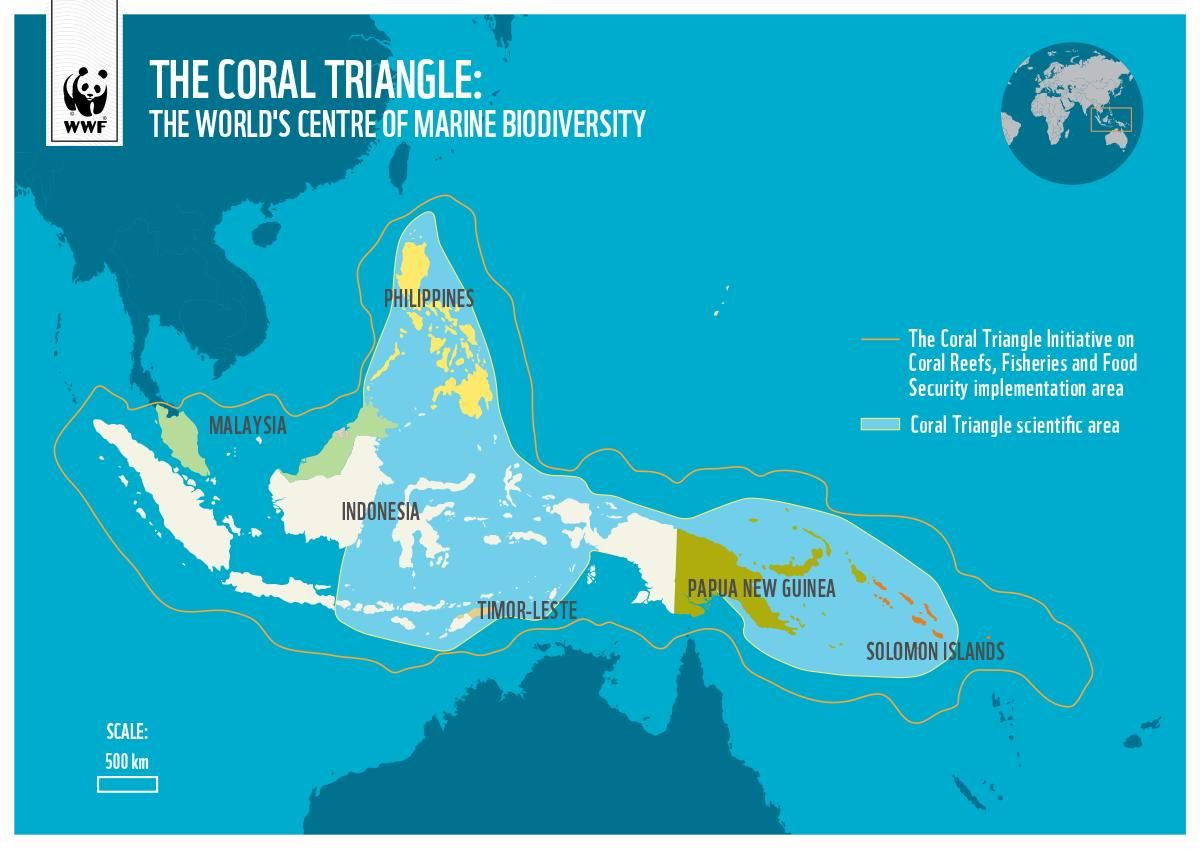
There’s an Amazon of the Seas, a forest of coral, and you can find it in Southeast Asia. Dubbed ‘The Coral Triangle,’ it’s a large swath of island chains with the highest marine biodiversity on the planet. Bounded by the Philippines to the North, Malaysia to the West, and the Solomon Islands to the East, this area is absolutely worth the long plane ride for some epic dives.
Smack dab in the center of it all is Indonesia, which hosts the world’s best diving sites including Raja Ampat and Komodo.
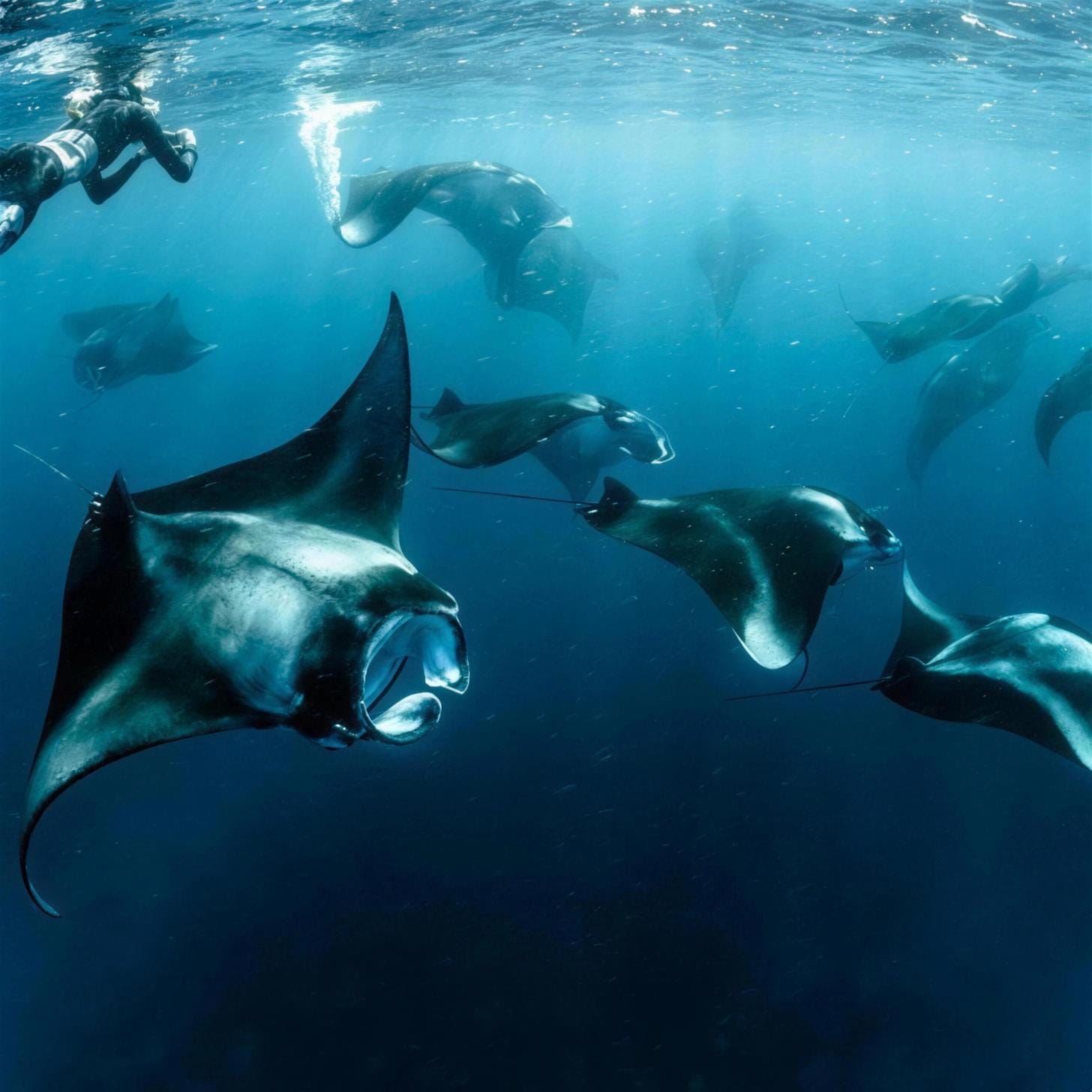
Some dive sites you visit, hoping to see something cool. Karang Makassar, on the other hand, or what our guides called Manta Point, is the other kind: a shallow, kilometres-long highway inside Komodo National Park with multiple cleaning stations. Mantas come for the little wrasse, who clean them up and get a good meal in the process. There are, not kidding, hundreds of mantas who float down this highway, and cruising alongside them (from a safe distance of course) is one of the most awe-inspiring experiences you can have underwater.
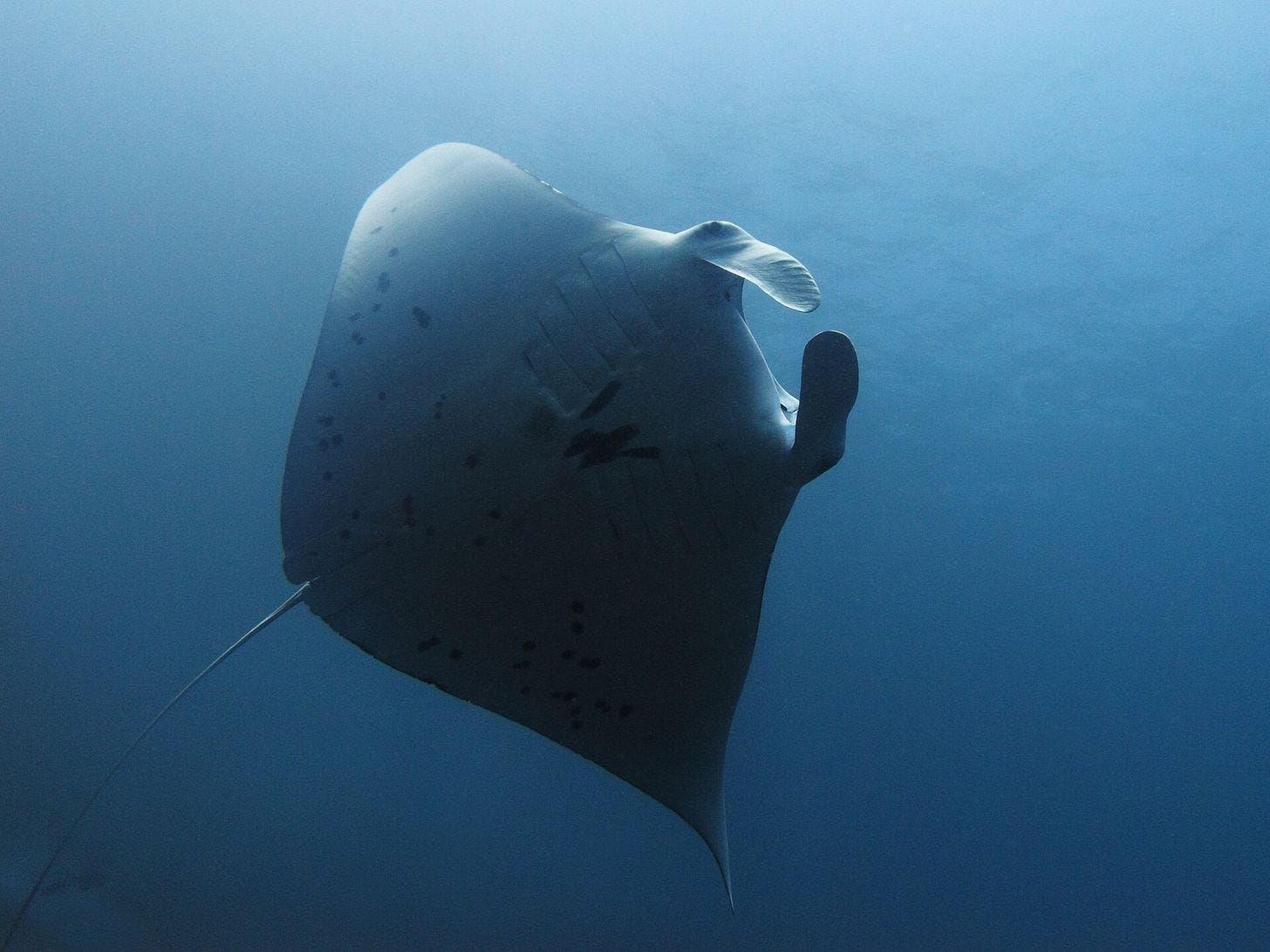
Komodo's mantas are reef mantas, with massive wingspans up to four metres or so, each one sporting a belly pattern of spots as unique as a fingerprint. While mantas can be seen at Makassar all year, guides try to time the biggest gatherings for maximum wow factor. But not to worry, we learned there’s a daily visitor quota (guides will ask you for this in cash prior to departure), so dive sites never feel like parking lots.
The dry season, roughly April to November, brings the calmest crossings and the most reliable boat schedule; the rainy months trade chop for plankton and bigger gatherings. We were there in early May, technically past the Manta Highway high season, and still saw several beautiful ones.
Getting There
Labuan Bajo is your home base for this set of dives, and it’s a 1 hour short hop flight from Bali. The island is known for its access to Komodo National Park and the famous (infamous?) dragons, but the small town is quickly becoming a general tourism powerhouse. The pace of development we witnessed around the Flores harbour led us to believe it’s an up and coming spot that will hit a lot of influencer itineraries in the coming years.
Remember to leave the last day of your itinerary dry: the rule about flying after diving and a lazy view over the harbour at sunset agree with each other.
Frequently asked
When is the best time to dive Komodo and see manta rays?
The dry season, roughly April to November, brings the calmest crossings and most reliable boats. Reef mantas show year-round at Manta Point (Karang Makassar), but July to September runs cooler: in the park's south, thermoclines can drop to around 22°C at depth, so pack a 5 mm wetsuit.
What scuba certification do you need to dive Komodo?
Open Water is enough for the calmer sites like Manta Point on a good day. The famous high-current pinnacles (Batu Bolong, Castle Rock, Crystal Rock) are drift dives best left to Advanced divers with recent experience. Be honest about your logbook when you book.
Liveaboard or day trips from Labuan Bajo: which is better?
Fast day boats from Labuan Bajo now cover most of the famous sites, including the northern pinnacles Castle Rock and Crystal Rock at about two hours each way. A liveaboard (typically 3 to 10 nights) buys you the far south, where Manta Alley peaks from November to March, plus first-boat starts before the day fleet arrives. Choose by how much of the park you want, not by the site names.
How do you get to Labuan Bajo for diving?
Fly into Labuan Bajo on Flores: about a one-hour hop from Bali, which connects to most international gateways, and there are direct flights from Jakarta too (around 2.5 hours). The harbour town is the home base for Komodo National Park, and the dive shops, boats, and hotels all cluster around it.
Do you need a permit or fee to dive Komodo National Park?
Yes, and it's now booked online: the park caps entry at 1,000 visitors a day and permits must be reserved two to three days ahead through the official SiOra system. Most dive operators book the slot for you once you send passport details; budget around IDR 300,000 per diving day for internationals, entry plus surcharges. The cap is deliberate: it keeps even the best sites from feeling like parking lots.
Can you see the Komodo dragons on the same trip?
Yes: most itineraries pair the diving with a ranger-led walk on Rinca or Komodo island to see the dragons, plus stops like Padar's viewpoint and the pink beaches. Leave the last day dry, though: the no-fly-after-diving rule and a sunset over the harbour go well together.
Originally published at jadepeak.com.